
Last updated November 23, 2026
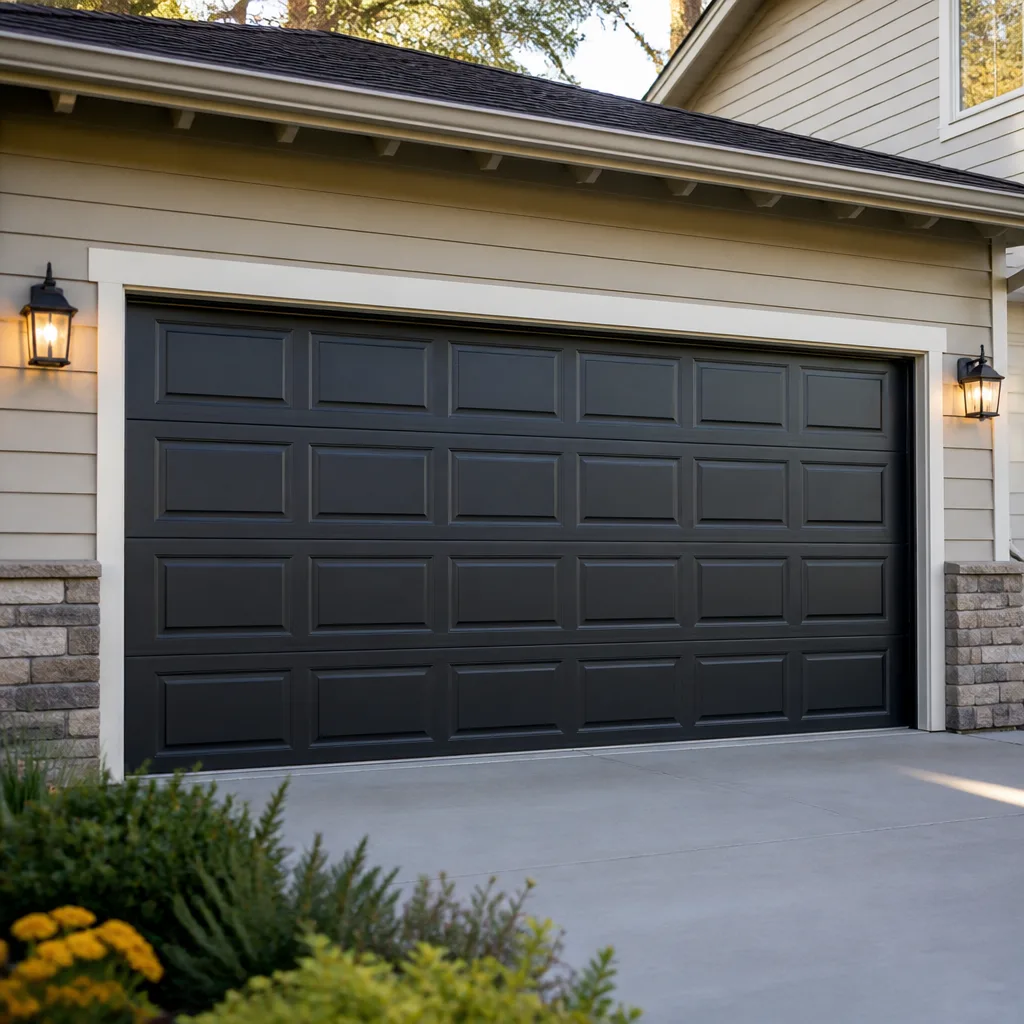 Raised-panel steel
 Carriage house
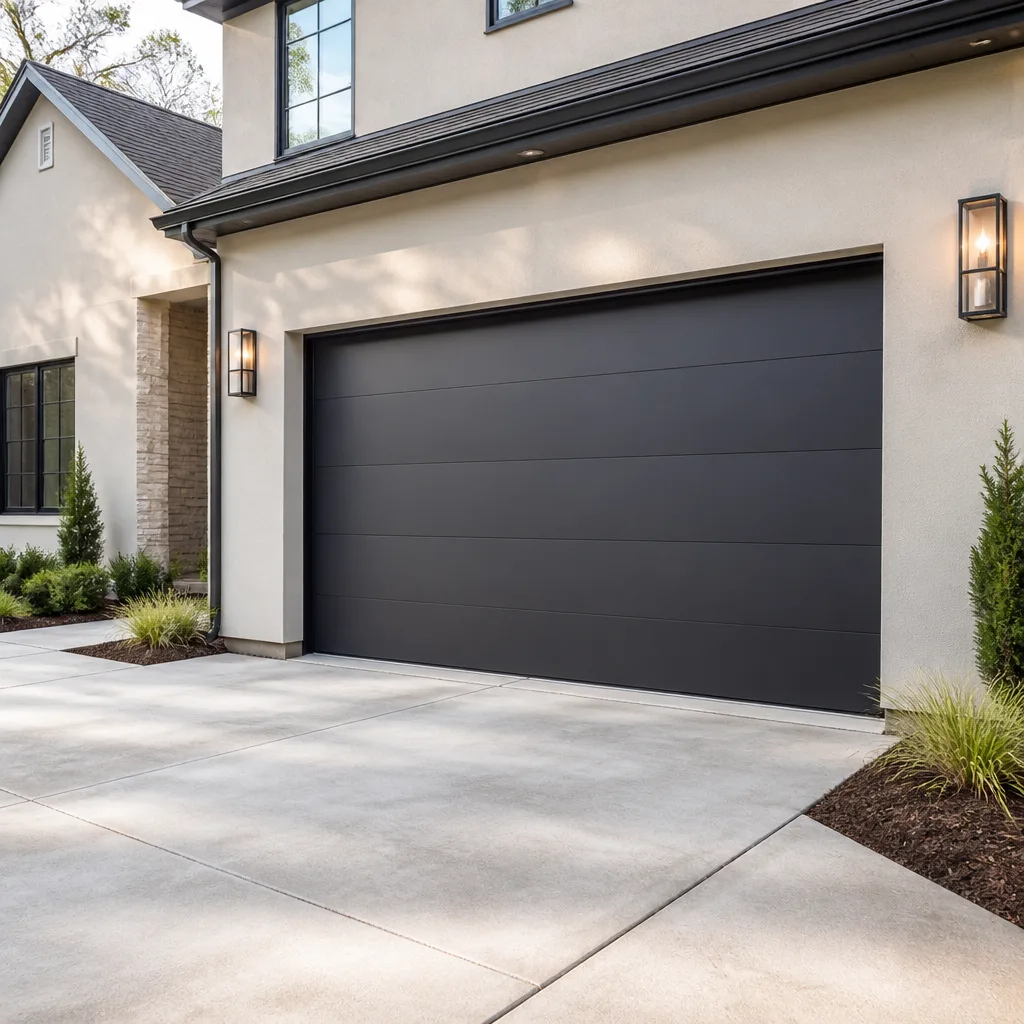 Modern flush
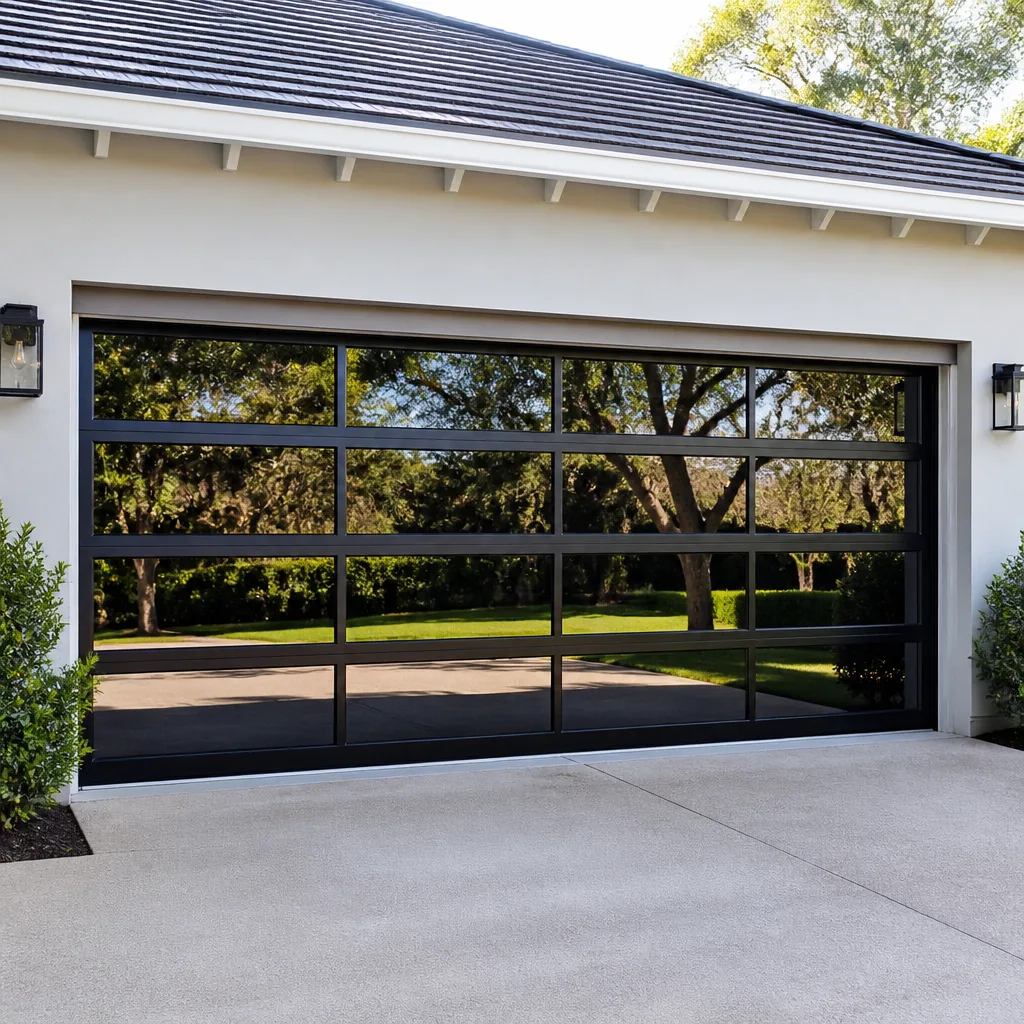 Full-view glass
 LiftMaster openers
 Chamberlain openers
Full 25-point door and opener safety check with every visit - springs, cables, rollers, tracks, and your LiftMaster or Chamberlain opener included
You get a price before we start. It does not change when the pro arrives.
Get your free estimateGarage Door Warning Signs: A Texas City Homeowner’s Reference Guide
Most garage door failures don’t start with a bang. They start with a sound you hear twenty times and dismiss as the door “settling.” A roller worn down to its axle stem grinds instead of rolling, and within a few dozen cycles it drops the door off its track mid-travel. The homeowner who catches that grind early pays for a roller and a tune-up. The one who ignores it pays for a track, a panel, and a stranded car. This guide decodes what your door is telling you, mechanically, so you know whether to watch it, schedule it, or call someone today. We’ve written it from Texas City, where humid air and heavy use put specific stresses on springs, seals, and openers.
Quick Answer
The garage door warning signs that matter most are a loud snap (broken spring), a scrape through the travel (derailed or worn roller), a thud at the top or bottom (cable jump), and a rhythmic click with no movement (limit switch or opener fault). If your door is also hard to lift by hand, unbalanced halfway up, or making any new grinding noise, treat it as a “call this week” item. If you’ve heard a snap and the door won’t lift, that’s a “call today” situation – and you shouldn’t touch the springs yourself.
Styles & brands we work with
- Raised-panel steel
- Carriage house
- Modern flush
- Full-view glass
- LiftMaster openers
- Chamberlain openers
Table of Contents
- The Four Sounds and What They Actually Mean
- Visual Warning Signs: What Rust, White Deposits, and Bowing Panels Tell You
- Opener Behavior: Three Failures That Look Identical (But Aren’t)
- The 60-Second Balance Test
- Repair Today, Repair This Week, or Watch and Document
- Signs That Show Up Faster in Texas City’s Climate
- Why Brand Matters When You Finally Call
- Common Mistakes to Avoid
The Four Sounds and What They Actually Mean
Your ear is the cheapest diagnostic tool you own. Different failures produce distinctly different noises, and once you can tell them apart you’ll know exactly how urgent the problem is. In our experience working on doors across Texas City, the vast majority of homeowners describe one of these four sounds when they call:
- The snap. A sharp, loud crack like a gunshot, often followed by the door slamming down. This is almost always a broken torsion or extension spring. Don’t run the opener. Don’t try to lift the door by hand to see if it works. The spring counterbalances hundreds of pounds of door weight, and a snapped spring means all of that weight is now unsupported.
- The scrape. A metallic grinding or dragging sound at one point in the travel, usually as the door passes a specific height. This points to a roller that’s worn flat, seized, or bent out of its hinge, or a hinge that’s lost its shape. Left alone, the door rides unevenly and can jump the track entirely.
- The thud. A heavy bump at the top or bottom of travel, sometimes paired with a slight jerk or wobble. Often a sign of a cable that’s jumped a drum, or a drum that’s slipped alignment. Cables are under extreme tension and should never be handled by a homeowner.
- The click. A rapid, repetitive clicking with no door movement at all. This is electrical or logic, not mechanical – typically a limit switch, a travel adjustment, or a capacitor failing to start the motor. This one gets diagnosed at the opener, not the door.
There’s a fifth sound worth noting: a light, rhythmic rattle as the door raises. That’s usually loose hardware – roller stems, hinge bolts, or track brackets that have worked loose. It’s often harmless but lets a technician identify what’s loosening, and it’s a simple fix when you catch it early. If any of these sounds are new in the last few weeks, that’s your cue. Same-day help is available through our garage door repair service, and if the door is stuck open or closed, call us – we treat it as what it is.
One local reality: Texas City’s humid air makes metal components work slightly differently than in drier parts of the state. Rollers and hinges don’t rust overnight, but they do lose lubrication faster than most homeowners expect, which is why the scrape and rattle sounds show up here sooner than the door’s age would suggest.
Visual Warning Signs: What Rust, White Deposits, and Bowing Panels Tell You
You don’t need to climb a ladder to read most problems. A two-minute walk-around, done once a season, catches the failures that grow slowly and quietly. These are the visual cues we look for first on any door, and the ones you should watch too:
- Rust streaking on the spring shaft or drums. A thin line of orange-brown running down the torsion tube or around a drum is a sign that moisture is sitting on the hardware and the finish has broken down. It also tells you the roller bearings and hinges nearby are likely past their lubrication cycle. Rust on the spring itself, especially near the coil, is worth pointing out to a technician – springs crack where the metal thins.
- White mineral deposits on the bottom seal. Chalky white residue on the rubber or vinyl bottom seal is a telltale sign that moisture is reaching the seal’s underside. Once the seal hardens or cracks, the door lets air, water, and insects in – and if your door has a photo-eye safety system, the seal also stops sitting flush against the floor, which can cause the opener to reverse unpredictably.
- Bowing or waviness on a panel. Panels that already show a slight bow or warp – often from moisture intrusion into wood or the hollow panel core – will only get worse with thermal cycling. A bowed top panel also stresses the springs unevenly, which shortens their life.
- Gap between the door and the floor. Squat down and look across the floor line. A visible gap on one side means the seal has flattened, the track is slightly off, or a hinge is worn. All three affect how the opener works and how the door closes.
- Track brackets pulled away or bent. A bent bracket leaning in or out from the wall is a sign the door has bumped something or the frame has shifted. If the gap on one side is visibly different from the other, don’t run the opener again until someone looks at it.
None of these require you to touch anything. Write down the date, snap a photo with your phone, and document what you see. If you’re seeing rust on the spring shaft, white deposits on the seal, and a gap between the door and floor at the same time, you’re looking at a door that’s due for a tune-up and likely a seal replacement. That’s a “call this week” conversation, not an emergency.
Opener Behavior: Three Failures That Look Identical (But Aren’t)
Here’s a pattern we see repeatedly: the door hums for a second or two and stops. Doesn’t move. Doesn’t click. Just hums and gives up. To a homeowner, that’s one broken thing. To a technician, it’s three separate failure modes, and the repairs sit in very different price brackets. Knowing which one you’re facing saves you from a phone call that starts with “it just won’t open” and ends with a bill you didn’t expect.
Failing motor capacitor
The capacitor gives the motor its starting kick. When it fails, the motor hums but can’t overcome the inertia of the door. Fixing it is a small, contained repair that usually has you back in business the same visit. On a LiftMaster or Chamberlain unit, this is a common age-related failure and it’s one of the cheapest fixes in the opener category.
Worn drive gear
Inside the opener housing, a plastic or nylon drive gear meshes with the motor. Over time the teeth wear smooth, the motor spins but nothing turns, and the door sits still. You may hear a faint whirring with no movement. This repair is more involved than the capacitor, since the gear lives inside the housing, but it’s still cheaper than replacing the opener outright.
Stripped trolley or carriage
The trolley is the little carriage that clips onto the rail and pulls the door along. If the trolley’s arm has snapped, its pin has sheared, or the carriage has lost grip on the belt or chain, the opener runs perfectly, the rail moves nothing, and the door stays put. You might see the open/close light blinking as if the door is operating. A stripped trolley on a Genie or a Wayne Dalton opener is a repair, not a replacement.
And then there’s the fourth category – the one that isn’t a mechanical failure at all. Modern openers from LiftMaster, Chamberlain (with its MyQ system), and Genie route a lot through their connected home integration, and a confusing “opener won’t respond” call sometimes ends with a simple app re-pairing or a limit switch setting that drifted a few degrees. A technician who knows these systems well can tell the difference between a phone that needs re-pairing and a gear that’s stripped within a minute or two of diagnosis. That matters because you shouldn’t pay for a repair you don’t need. If you’re seeing opener trouble, the first step is a proper garage door opener repair diagnosis – not a guess.
The 60-Second Balance Test
This is the single most useful thing you can do for your door, and it costs nothing but about a minute. The balance test tells you whether your springs are still doing their job or whether they’re losing tension – which is the stage where a spring is most likely to snap and the door most likely to drop without warning.
Here’s how it works – what to do and, importantly, what not to do:
- Close the door fully and disconnect the opener. Most openers have a manual release handle you pull to disengage the trolley. Pull it, and the door should now move by hand along the tracks. This is the only step that involves touching the door at all.
- Lift the door to about waist height, then stop. A properly balanced door with healthy springs should stay where you leave it – roughly halfway up – without falling or drifting. If it drops, those springs are not counterbalancing the door weight.
- Look at the spring shaft from below. Do not climb on a ladder. Do not touch the torsion bar. Do not remove any covers. Just look for the obvious: a visible separation in the coil, rust near the coil, or a door that sagged when you weren’t pushing it.
- Reconnect the opener and close the door. Re-engage the trolley by hand and let the opener bring the door down. Test complete.
If the door drifted down on its own, or if lifting it by hand felt much heavier than usual, treat the springs as the suspect. Do not run the opener repeatedly on a door that fails the balance test – every cycle on weak springs is a cycle where the door could drop. Spring repair is genuine high-tension work; the spring under a standard residential door holds hundreds of pounds of torque and should only be serviced by a trained technician. Our garage door spring repair page walks through what the job actually involves, including why a matched pair is usually replaced together rather than just the broken spring.
Repair Today, Repair This Week, or Watch and Document
The most useful thing we can give a homeowner isn’t a repair estimate – it’s a triage framework. Not every warning sign needs a same-day call. Some need a scheduled visit. Some just need a note in your phone and a re-check in a month. Here’s how we sort them, and why.
Repair today
- A loud snap followed by the door not lifting, or the door hanging in an awkward position.
- The door stuck open (security and weather exposure) or stuck closed (can’t get the car out).
- A door that has visibly left its tracks or is hanging crooked.
- A bent or cracked track, or a door that has hit something and doesn’t move level.
- An opener that reversed on its own during a close cycle, or a photo-eye that’s showing a fault light.
These are the cases where waiting a week can turn a repair into a replacement. This is when emergency service matters – it’s about stopping the damage, not about paying a premium. The price is still set per job by the written estimate.
Repair this week
- New grinding or scraping during travel (roller or hinge).
- Door noisy enough that it’s waking the neighbors, particularly on Genie and Clopay units with older roller sets.
- The door fails the balance test but still opens with the opener.
- Rust on the spring shaft or drum, or white mineral deposits on the seal.
- Opener running but the door not moving (trolley or drive gear).
These aren’t emergencies, but they’re all things that get more expensive if left for a month. A worn roller is a $80-level fix; a derailed door that cracks a panel and bends a track is a $400-level fix, and one of those numbers doesn’t include a new panel. Catching the small signs is the entire point of this guide.
Watch and document
- Mild rattle on the uphill travel – often loose hardware, worth tightening at the next service.
- Slight seasonal change in the door’s sound (humidity affects lubrication).
- An occasional single click from the opener on the first cycle of the day.
- Aim of the photo-eye that drifts if something bashes the bracket (check it, don’t fix it).
For these, note the date and behavior in your phone. If the rattle becomes a grind, the occasional click becomes every cycle, or the drift becomes a gap, you’ve moved yourself from the “watch” column into the “call this week” column. Being honest about which category you’re in is the difference between a small repair and a large one.
Signs That Show Up Faster in Texas City’s Climate
Every region puts its own stresses on a garage door. In Texas City, the combination of warmth and humidity means moisture sits on metal and rubber longer than it does in drier parts of Texas, and that shows up in specific places on your door. If you’ve moved here from a drier climate, these are the signs you may not be watching for yet.
- Rust streaking at the spring shaft and drum. The torsion tube is the first place moisture collects. A faint orange line is your earliest visual cue that the hardware around it is due for attention – and that the lubrication cycle has been neglected.
- White mineral deposits along the bottom seal. Hard water and humidity combine to leave a chalky film on the rubber. Once the seal hardens, it stops seating, the door doesn’t close flush, and the opener has to work harder on every cycle.
- Panel bow from moisture intrusion. Wood and hollow-core panels absorb moisture over time. A slight warp on a panel is often the beginning of a bigger problem – and on a Texas City door, that warp is likely to stress the springs unevenly.
- Opener cabinet condensation. If you’ve ever felt moisture inside a garage on a warm morning, you know the opener housing has seen it too. That’s a slow stress on electronics – the limit switch, the capacitor, the logic board – and one of the reasons a smart opener can behave oddly in humidity. If your LiftMaster or Chamberlain MyQ app shows a fault you can’t clear, that’s worth a diagnostic visit.
The good news: none of these are catastrophic if caught on a seasonal walk-around. If you’re in Texas City and your door has never been looked at, a tune-up that addresses seals, hinges, and lubrication is a modest job. It’s also the job that most extends the life of a Clopay or Amarr panel door, which is why we recommend it before the heat of summer rather than after.
Why Brand Matters When You Finally Call
We work on eight of the industry’s dominant garage door and opener brands: LiftMaster, Chamberlain, Genie, Clopay, Amarr, Wayne Dalton, Craftsman, and Raynor. That’s not a slogan – it’s the reason a diagnosis takes a few minutes instead of a return trip. A snapped spring on a Wayne Dalton torsion system looks different from one on a Clopay panel door. A Genie opener’s drive gear and a Craftsman opener’s trolley fail in different ways, and the parts aren’t interchangeable. When you call a generic handyman or a dealer locked into one brand, you get a guess or a hard sell. When you call a team that already knows your brand’s hardware, you get a diagnosis.
The brand question matters most in three situations. First, springs: a technician who knows your door’s spring configuration can tell you whether a pair is matched and whether the original spec was correct for the door weight. Second, openers: the MyQ layer on a Chamberlain or LiftMaster, the legacy wiring on an older Genie, the compatible remotes on a Craftsman – these details affect what a repair involves. Third, replacement: when you’re ready for a new door, brand familiarity lets us talk honestly about Amarr versus Clopay versus Wayne Dalton panels and what each means for your opening and your hardware, rather than steering you to whichever brand happens to be on the truck that day. The full installation scope, from opener to panels to tracks, stays with one team.
Common Mistakes to Avoid
- Running the opener on a door with a broken spring. The motor is pushing against dead weight and will overheat or strip the drive gear. A cheap spring repair turns into a spring plus opener replacement. Stop, and call.
- Lifting the door by hand to “test” a snapped spring. A torsion spring under load can cause serious injury. Never put your hand, arm, or a tool anywhere near the spring shaft, drums, or cables. Only a trained technician should touch them.
- Ignoring a scrape through travel. A worn roller is a small fix. A derailed door that cracks a panel and bends a track isn’t. The scrape is your warning – use it.
- Assuming the open/close light means the opener is healthy. The light just confirms the opener is powered. It says nothing about whether the trolley is stripped, the capacitor is failing, or the drive gear is worn.
- Relying on a general handyman for high-tension spring work. A spring is not a hinge. Springs, cables, and drums are the highest-risk components on the door, and they’re the part where a generalist can cause damage – to the door or to themselves.
- Skipping the seasonal walk-around in humid weather. Texas City’s air puts moisture on springs, seals, and opener housings year-round. Two minutes a season is the cheapest maintenance a door can get.
- Not documenting sounds and behaviors before you call. The technician can diagnose faster and quote more accurately when you can describe whether the noise happens on open, on close, or at both. A photo of the spring shaft and a note of when the noise started saves a diagnostic trip.
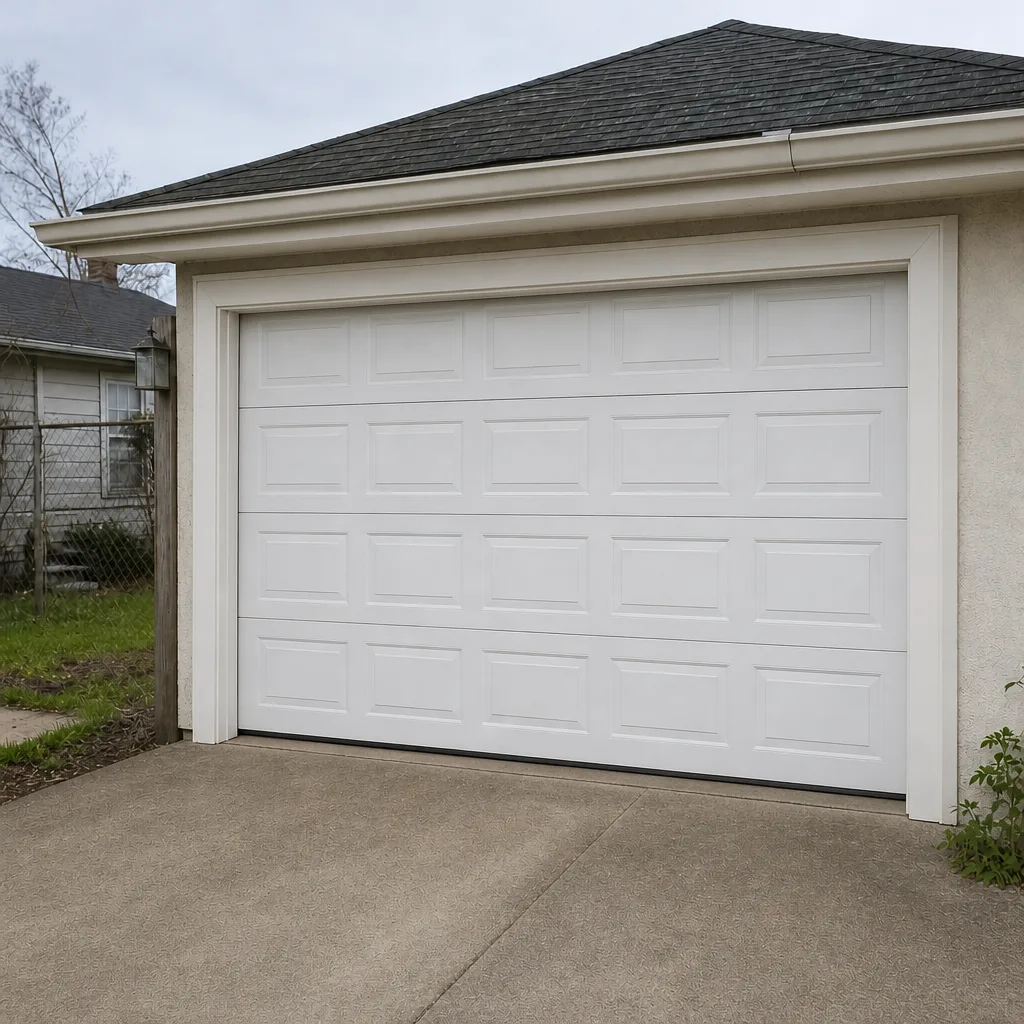
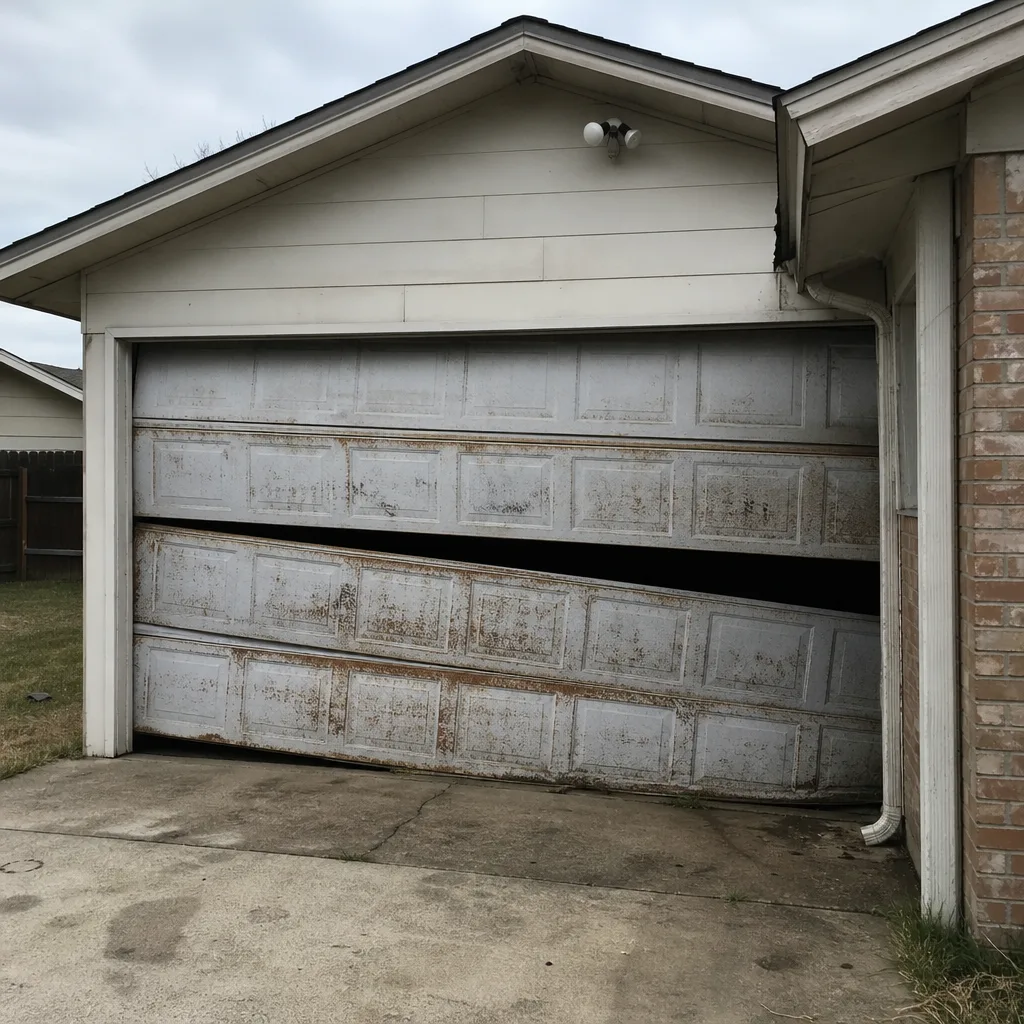
See the difference
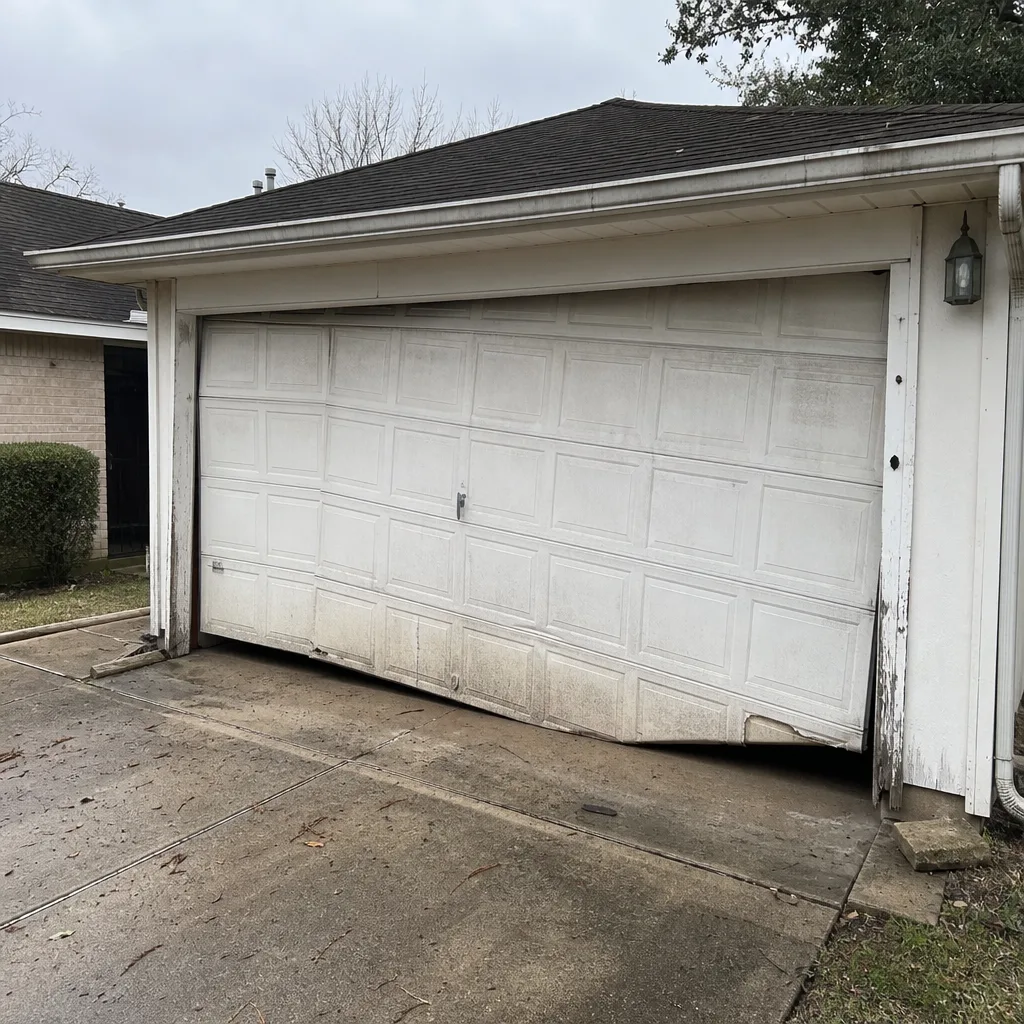 Before
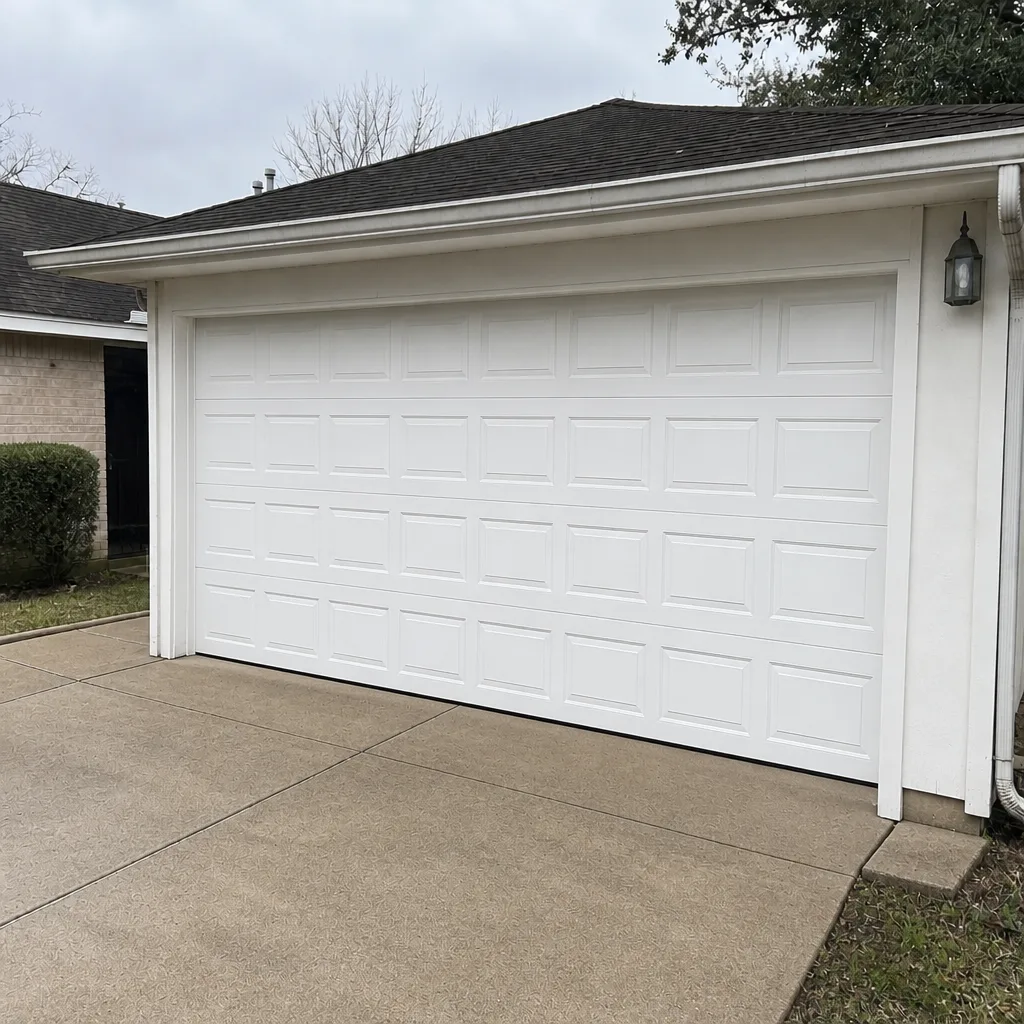 After
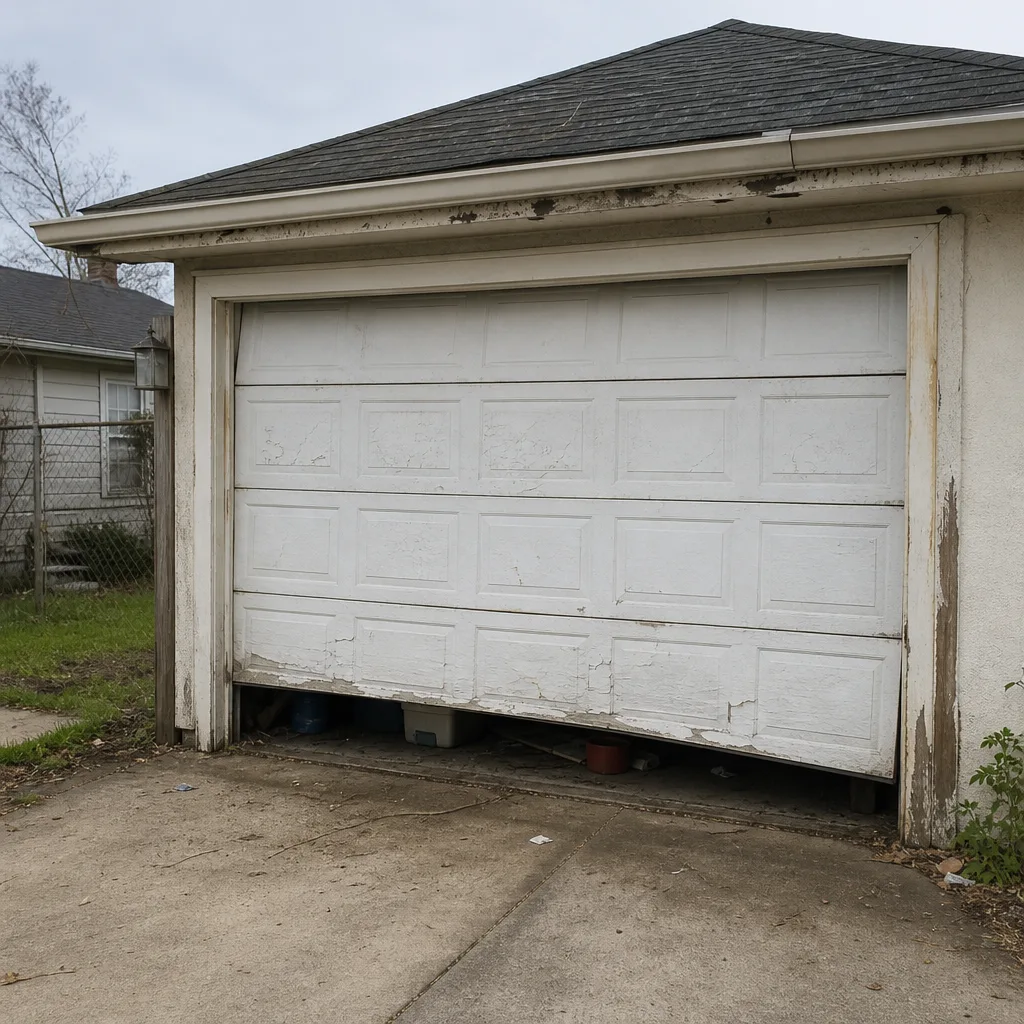 Before
 After
 Before
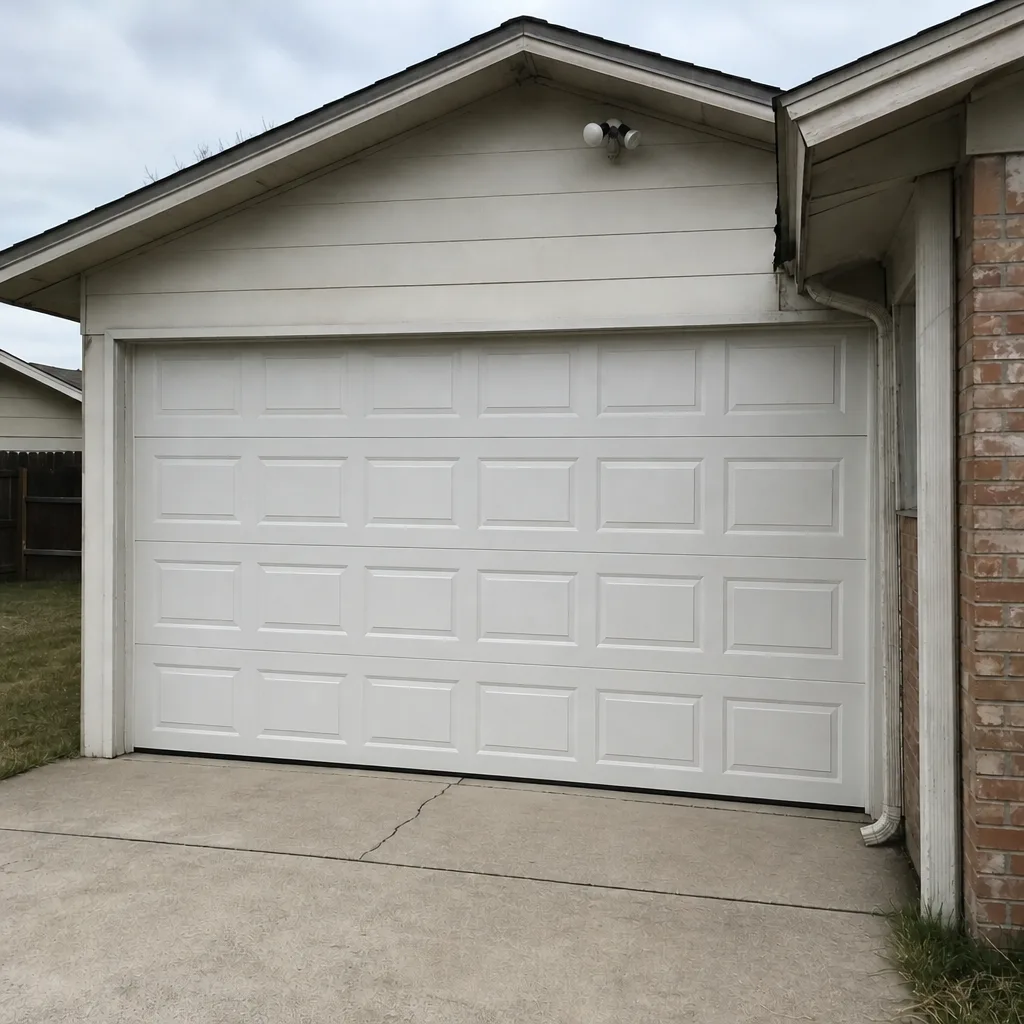 After
When to Call a Professional
Call a professional the moment a spring snaps, a cable slips, or the door leaves its tracks. Call today, not next week, if the door is stuck open or closed, or if the door has become hard to lift – those mean the counterbalance system has failed. Call this week if you’re hearing a new scrape or grind, if the balance test failed, or if rust and mineral deposits suggest the hardware is overdue. Watch and document a mild rattle or a single occasional click, and revisit it in a month. Anything involving the springs, cables, or drums is not a homeowner job; the tension is dangerous and shouldn’t be handled without training. Texas City Garage Door Repair Pros offers free estimates in Texas City – call (844) 443-3807. We answer 24/7. Fast dispatch from 7am to 7pm, Sunday through Friday.
Frequently Asked Questions
The first sign is usually a door that has become harder to lift by hand, or one that no longer stays put when you leave it halfway up during a balance test. A visible gap in the spring coil or a crack near the end is a later sign. If the door fails the balance test, have it checked before you keep cycling the opener.
Once, slowly, to get your car out – and then stop until someone looks at it. A badly worn roller can let the door jump the track in the next few cycles, and that turns a small roller repair into a track and panel job. Call for a same-day appointment if the car is stuck inside.
A hum with no movement usually means the motor can’t start the door – most often a failing capacitor, though a worn drive gear can produce a similar symptom. The humidity in Texas City stresses the opener electronics over time, and diagnosing which component failed takes a few minutes on site. Don’t keep pressing the button; each attempt pushes the motor harder.
Spring prices vary by door size and spring type, and the written estimate sets the final number. What we won’t do is quote you a range and then add fees once we arrive. A matched pair is usually replaced together rather than a single spring, since mismatched springs stress the door. Call (844) 443-3807 for a free estimate.
Scraping on the way up typically points to a roller or hinge on the track. It’s serious enough to address this week – not a same-day emergency unless the door has also jumped the track. Note where in the travel the scrape happens; that tells the technician which side to examine first.
Not a different trade, but you do want someone familiar with the brand. LiftMaster, Chamberlain, and Genie all have connected-home features, and diagnosing a “door won’t respond” complaint on a MyQ-enabled opener means ruling out the app or limit switch before assuming a mechanical failure. We work on all three, alongside Craftsman, Wayne Dalton, Clopay, Amarr, and Raynor.
The Bottom Line
Warning signs are cheap. Failures are not. A scrape that leads to a roller is a quick fix; the same scrape ignored can derail the door and turn into a track and panel job. That’s the entire argument for watching and listening – the door is telling you what’s coming, and the only question is whether you notice in time. Do the balance test once a season. Walk the door and look at the spring shaft, the seal, and the panels. Categorize what you find as “today,” “this week,” or “watch.” And when the sign points to springs, cables, or a door off its tracks, call a trained technician rather than reach for a tool. If you’re in Texas City and you’re not sure which column you’re in, call (844) 443-3807. Free estimates. We answer 24/7. Fast dispatch from 7am to 7pm, Sunday through Friday – and remember, Texas City Garage Door Repair Pros handles everything from a single spring to a complete new door.
Written by the team at Texas City Garage Door Repair Pros.