
Last updated November 23, 2026
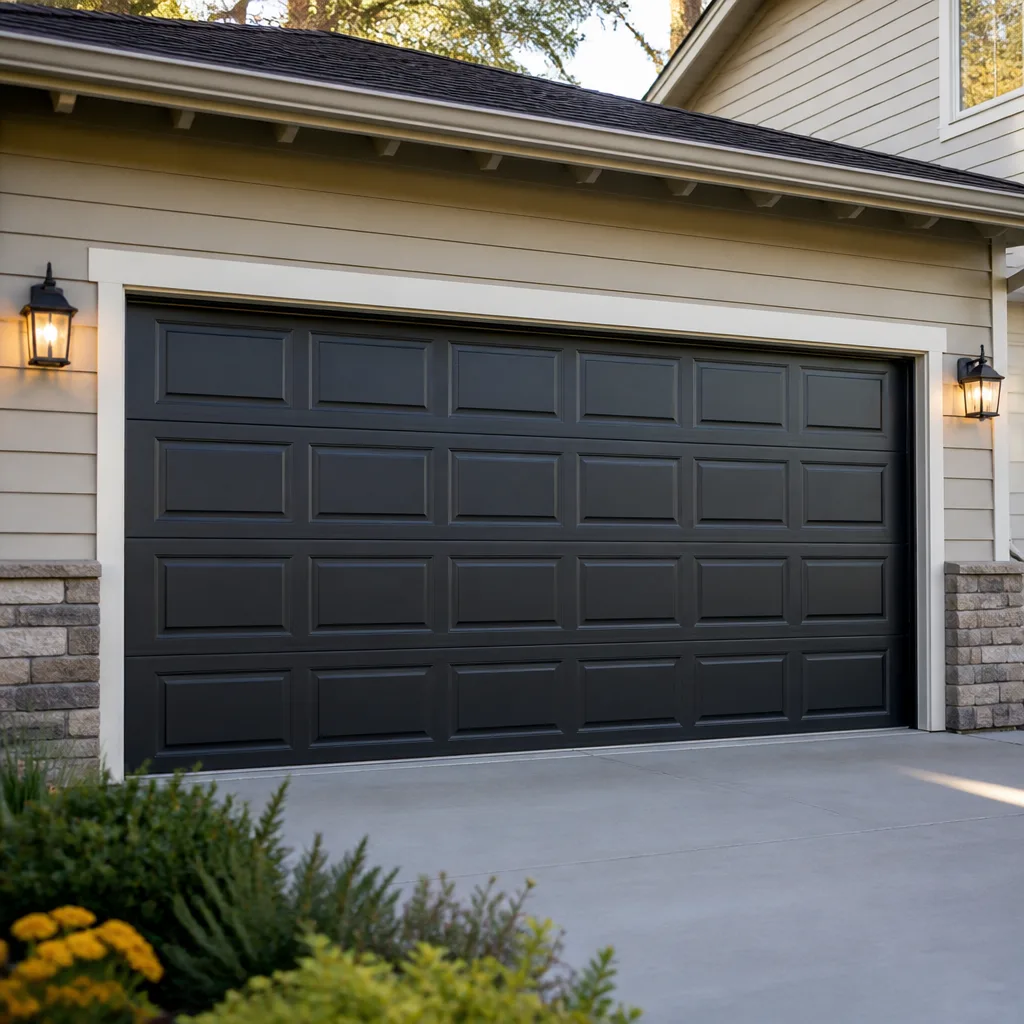 Raised-panel steel
 Carriage house
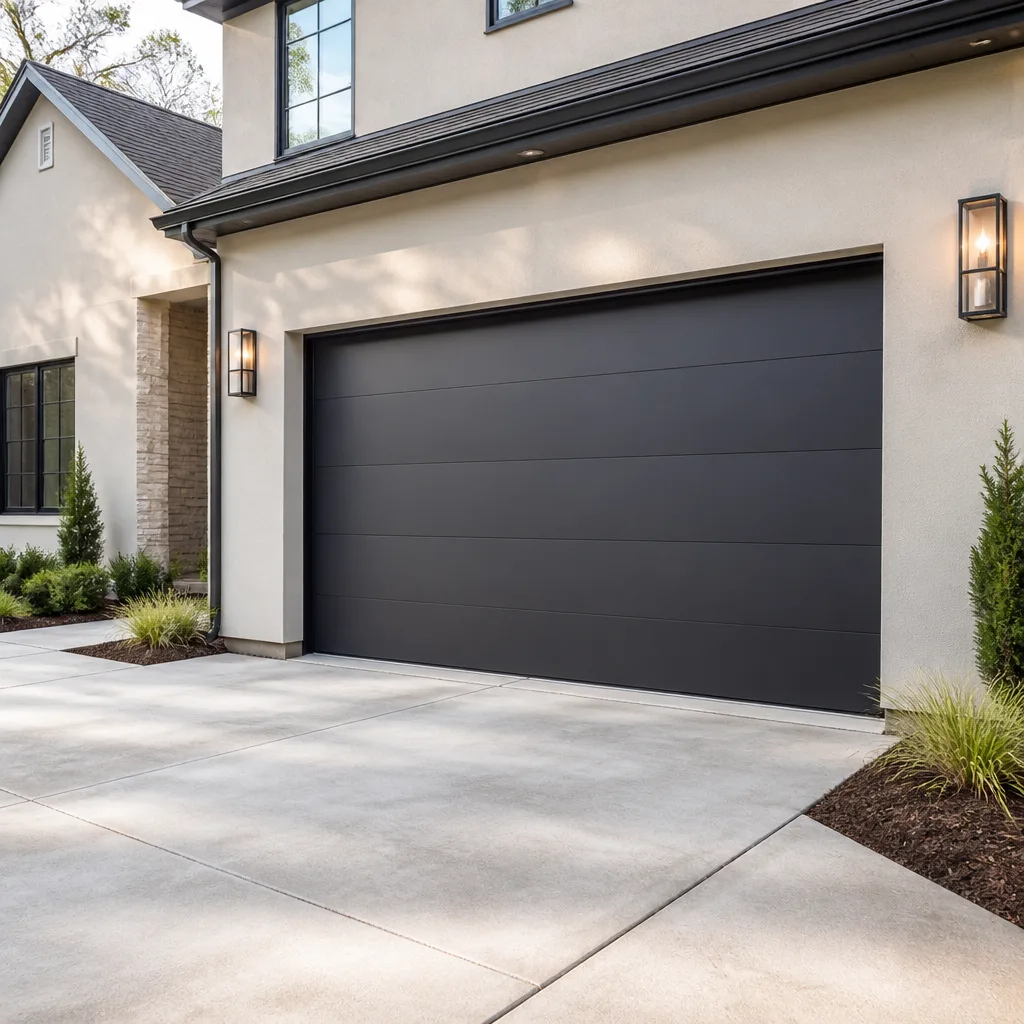 Modern flush
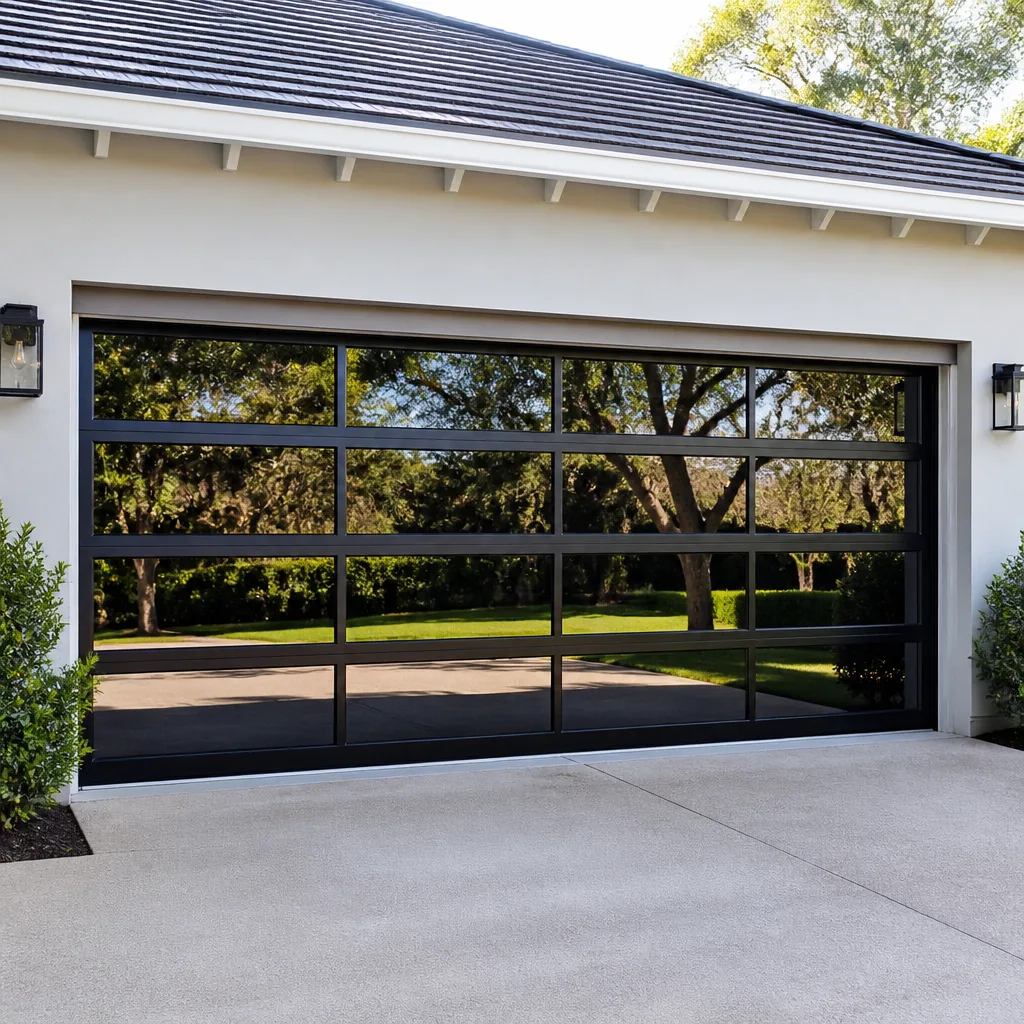 Full-view glass
 LiftMaster openers
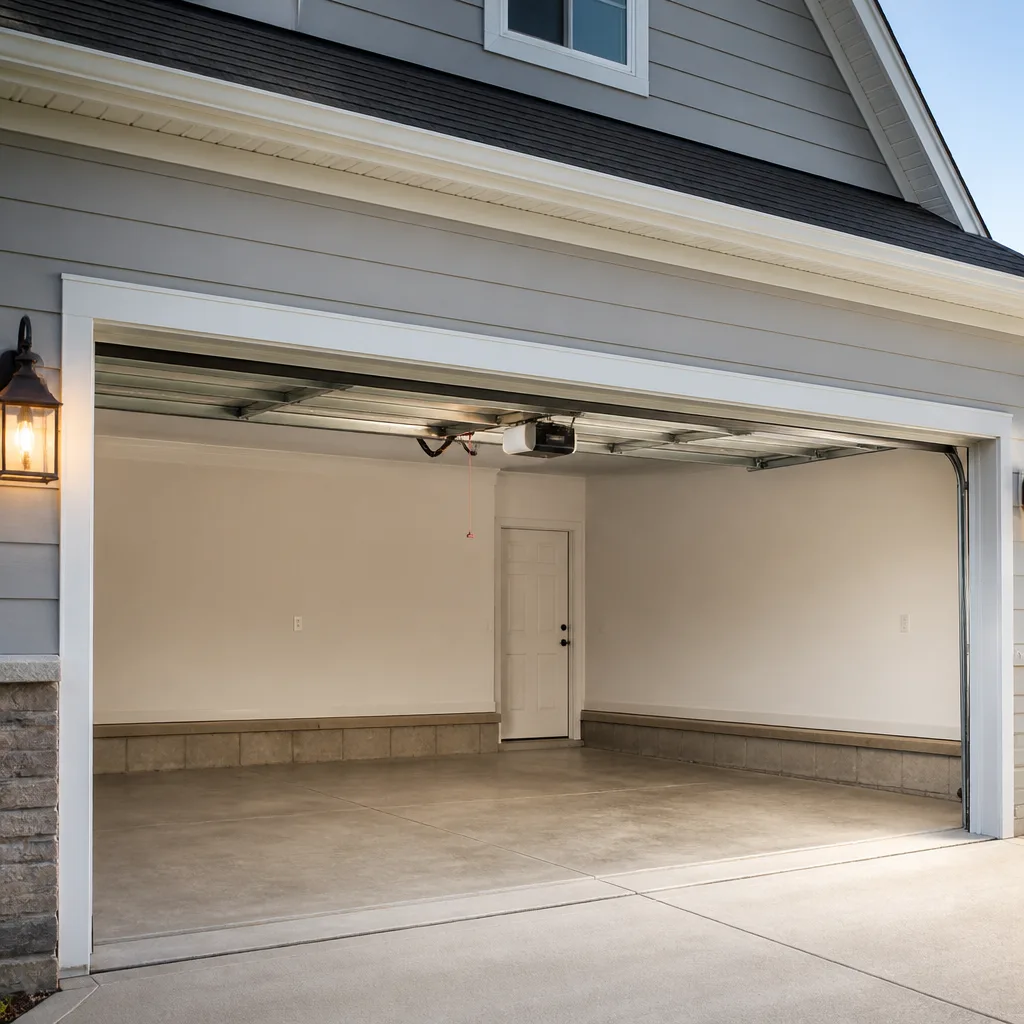 Chamberlain openers
Full 25-point door and opener safety check with every visit - springs, cables, rollers, tracks, and your LiftMaster or Chamberlain opener included
You get a price before we start. It does not change when the pro arrives.
Get your free estimateGarage Door Repair Troubleshooting in Texas City: Common Problems and How to Fix Them
The most wasted service call we see starts with good intentions and the wrong target. A homeowner has already adjusted the travel limits, sprayed lubricant on the tracks, and reset the opener, all while chasing a symptom that points somewhere else entirely. A door that reverses before closing is often a misaligned photo-eye, not a travel problem. A loud bang followed by silence is almost never the opener. Learning to read what your door is actually telling you saves time, money, and a lot of frustration. This guide walks you through the real failure points on a Texas City garage door, what you can safely touch, and where the DIY line sits.
Quick Answer
Most garage door problems fall into three buckets: obstruction and sensor faults, opener and logic faults, and mechanical failures in the springs, cables, or tracks. You can safely inspect and adjust photo-eyes, travel limits, and force settings yourself. Anything involving spring tension, cable drums, or the trolley carriage is high-tension work that belongs to a trained technician. When in doubt, stop and call.
Styles & brands we work with
- Raised-panel steel
- Carriage house
- Modern flush
- Full-view glass
- LiftMaster openers
- Chamberlain openers
Table of Contents
- Symptom-to-Cause: A Decision Tree for Your Door
- How Texas City Humidity Creates Its Own Failure Patterns
- The Bang, the Snap, and the Slack: Springs and Cables
- Opener Logic Faults and Brand-Specific Error Codes
- The DIY Ceiling: What You Can Adjust and What You Can’t
- How to Describe the Problem So It Can Be Quoted Over the Phone
- When to Call a Professional
- Frequently Asked Questions
Symptom-to-Cause: A Decision Tree for Your Door
Before you pick up a wrench or call anyone, slow down and watch the door through one full open-and-close cycle. Note exactly where the motion stops, what sound it makes, and what the opener light does. That observation narrows the fault faster than any guess.
Here’s the decision tree we walk through on the phone with a Texas City homeowner:
- Door reverses before it reaches the floor. The photo-eye safety sensor is blocked, misaligned, or dirty. A lens fogged by humidity, a cobweb, or a trash can nudged into the beam will all cause this. The door is doing exactly what it’s designed to do. Clear the path between the two sensors and check that the small indicator lights on each are solid, not blinking.
- Opener runs but the door doesn’t move. The motor is spinning fine, so the fault is downstream. The trolley carriage may have been pulled free (the manual release cord got bumped), the drive belt or chain may be broken, or the door could be locked at the manual slide bolt. Pull the release cord and test the door by hand. If it moves smoothly by hand but not by motor, the problem is in the linkage.
- Loud bang then nothing. That bang is the sound of a torsion spring breaking. The opener may still hum, but it cannot lift a door with a dead spring, and the door is now dead weight. Stop. Do not cycle the opener again. A door with a broken spring is a safety issue and needs a technician.
- Door closes partway and stops. Either the travel limit is set short of the floor, or the force setting is too low and the opener is meeting resistance it reads as an obstruction. Both are adjustable, but check the door balance first.
- Grinding or scraping noise. This is usually a roller, hinge, or track problem, not a spring. Inspect the rollers for flat spots and the tracks for bends or debris.
- Door moves unevenly or looks crooked. A snapped or jumped cable is the likely cause. Both cables are under tension; this is a stop-and-call scenario, not an adjustment.
Reading the door this way means when you do call for garage door repair, you can describe the exact symptom. That gets you a sharper quote and a technician who arrives with the right part.
How Texas City Humidity Creates Its Own Failure Patterns
Generic troubleshooting guides written for a desert climate don’t match what a door in Texas City actually goes through. The Gulf Coast humidity here works on every part of the system slowly and steadily, and the failure patterns show up in specific places.
- Cables corrode before they snap. Steel lift cables don’t fail overnight. Moisture works its way into the strands and starts rusting them from the inside. The first sign is often a frayed spot near the drum or a cable that’s developed a rough, stiff feel. A technician checking balance and cables during routine service will catch this before it becomes an emergency.
- Wood bottom seals swell. A wood bottom seal or wood frame that soaks up ambient moisture will swell and drag on the floor. The door then meets resistance at the last few inches of travel and reads it as an obstruction, reversing off the floor. Homeowners often blame the sensor when the real culprit is a swollen seal pushing against the threshold.
- Photo-eye lenses fog and film over. Humidity leaves a film on the plastic lens caps of the safety sensors. When the beam weakens, the door becomes temperamental about closing. A dry cloth on the lens cap is a two-minute fix and one of the first things to check.
- Track and hardware surface rust. Condensation builds on cold metal, and while surface rust on a track isn’t a failure on its own, it tells you the rollers and hinges are collecting grit. That grit is what turns into a grinding noise later.
In our experience across Texas City, a door that’s been behaving oddly for weeks without failing outright during muggy stretches is usually showing one of these slow moisture effects. It’s worth a look before it turns into a broken cable or a hand-stuck door.
The Bang, the Snap, and the Slack: Springs and Cables
Springs and cables carry the actual weight of the door. That’s the whole reason the opener motor is small: the springs do the lifting and the motor just guides it. When they fail, the door becomes dangerous, and this is where the difference between a generalist and a specialist matters.
Torsion springs live on the shaft above the door and are wound to hundreds of pounds of stored tension. Extension springs run along the tracks on either side. Both store serious energy, and both are what people mean when they say spring repair is high-tension work.
What a broken spring looks and sounds like:
- A sharp, loud bang, often startling enough that it’s heard across the house.
- A visible gap in one of the torsion coils above the door.
- A door that feels impossibly heavy when you lift it by hand.
- An opener that strains or hums but can’t move the door.
Cables are just as serious. A cable that snaps or jumps its drum means the door can come down unevenly or jam at an angle. A jammed door puts lateral stress on the tracks and can drop the whole assembly. If a cable looks slack, frayed, or off its drum, do not cycle the door, and do not try to reseat it yourself. Reach out for garage door spring repair and let a trained technician handle the tension work.
The safety caveat worth repeating: springs and cables are the parts of a garage door system that cause serious injury when handled by someone without the proper winding bars, the right technique, and the training to read tension correctly. Adjusting travel limits is not the same category of risk. Trust the line. This is the work our technicians are trained for, and it’s built into the service specifically because it’s the highest-risk repair on a garage door.
Opener Logic Faults and Brand-Specific Error Codes
Modern openers are small computers with a motor attached. That means a lot of failures aren’t mechanical at all. They’re logic faults, sensor faults, or a remote that’s simply lost its pairing. And here’s the part that trips up homeowners doing their own research: the same blinking pattern does not mean the same thing across brands.
Consider the ten-blink code. On a Chamberlain unit, ten flashes on the diagnostic light points to a specific set of causes, typically relating to the safety sensor circuit. On a LiftMaster opener, ten flashes can point to a different fault entirely depending on the model series. The count matches, the meaning doesn’t. That’s why our approach is brand-first: we work on LiftMaster, Chamberlain, Genie, Raynor, and the other major brands, and we read the code against the actual model, not a generic chart.
Common opener symptoms and what they usually point to:
- Remote works intermittently or only up close. Often a dying battery, a weak logic board antenna wire, or interference from an LED bulb in the opener housing. Newer LED bulbs have been a frequent culprit in recent years.
- The wall button works but the remote doesn’t. Pairing issue or a bad remote, not the motor. Re-pairing is usually a two-minute fix with the manual.
- The opener beeps and the door reverses. Force setting or safety sensor. See the decision tree above.
- The door opens fine but won’t close, and the opener light flashes. Classic sensor obstruction. Start with the beam.
- Smart opener won’t connect to the app. Wi-Fi credential, firmware, or a hub issue. Genie, LiftMaster (MyQ), and Chamberlain (MyQ) all have app-layer troubleshooting separate from the motor itself. A technician who understands the app side saves you an hour of rebooting your router.
When the logic fault sits inside the board, it’s time for garage door opener repair rather than more resets. A tech can test the board, the capacitor, and the safety circuit in one visit instead of guessing at the next reset.
The DIY Ceiling: What You Can Adjust and What You Can’t
There’s a real line between what a careful homeowner can handle and what belongs to a technician. Respect it. Knowing which side of that line you’re on prevents injuries and wasted money.
Safe to handle yourself:
- Photo-eye alignment. The two small sensors on either side of the door track should point at each other. Nudge them until both indicator lights are solid. Wipe the lens caps dry.
- Travel limits. On the opener head, the open-limit and close-limit screws let you short or extend travel by small amounts. This is what your manual is for. It won’t kill you to get it wrong, but the door will either reverse too early or slam too hard, so adjust in small turns and test.
- Force settings. These control how much resistance the opener tolerates before reversing. Set them too high and the door won’t stop for an obstruction. Adjust conservatively.
- Roller and hinge lubrication. A quick spray of garage-door lubricant on the rollers, hinges, and spring coils (never on the photo-eye lens) quiets squeeaks.
- Manual release cord. Learn where it is and how to use it. In a power outage or a jammed door, it disconnects the trolley so you can lift the door by hand.
Not safe. Call a technician:
- Spring tension. Winding a torsion spring requires specific winding bars and knowledge of which way the tension runs. Getting it wrong is the leading cause of garage door injuries.
- Cable drums and lift cables. These are the counterpart to the springs. Even a slightly slack cable under tension can snap back.
- Trolley carriage and linkage repair. The carriage rides on the rail and connects to the door arm. If it has cracked or the drive belt has snapped, the repair involves disassembling the rail carriage.
- Track realignment. A bent track needs to be straightened or the section replaced; forcing it yourself usually puts the door off its rollers.
- Section replacement and panel work. Damaged bottom panels, dented sections, and opener re-mounts to the header all go to the technician.
When you get to the bottom of that second list, stop. Ask for a free on-site estimate rather than the next YouTube tutorial. The written price before work begins is worth more than the risk of a spring letting go.
How to Describe the Problem So It Can Be Quoted Over the Phone
A technician can often quote a job accurately from a good phone description, and that saves you a diagnostic visit. The trick is describing what you actually see and hear, not your guess at the cause. “The door is broken” doesn’t help. “The opener hums for three seconds, the door doesn’t move, and there’s a visible gap in the top spring coil” gives a technician everything they need to quote a spring replacement before ever pulling into the driveway.
Here’s the phone script we’d suggest:
- Brand and model. Grab the label on the opener head (LiftMaster, Chamberlain, Genie, Raynor, Craftsman, Clopay, Amarr, or Wayne Dalton). The label gives the exact model, which tells a technician the layout, the drive type, and the parts calls.
- Door type and size. Single or double car? Sectional or one-piece? Aluminum, steel, wood, or composite? This affects the weight class and the spring spec.
- The symptom in one sentence. “Door reverses halfway down” or “opener runs, door doesn’t move” or “loud bang, now the door is stuck open.”
- Sounds. Grinding, scraping, humming, clicking, silence. Note which.
- Opener light behavior. Is it blinking? Count the blinks and say so. Brand matters here; see the error code section above.
- What you’ve tried. Tell them if you’ve adjusted travel, force, or sensors, and if that changed anything. It prevents a repeat of the same fix.
- Access notes. If the door is stuck open, that changes the visit. If it’s stuck closed and your car is trapped, that also changes the urgency.
Give a technician those seven pieces of information and they can quote with confidence. It’s the difference between “we’ll have to see” and “we’ll bring a spring in the right size.”
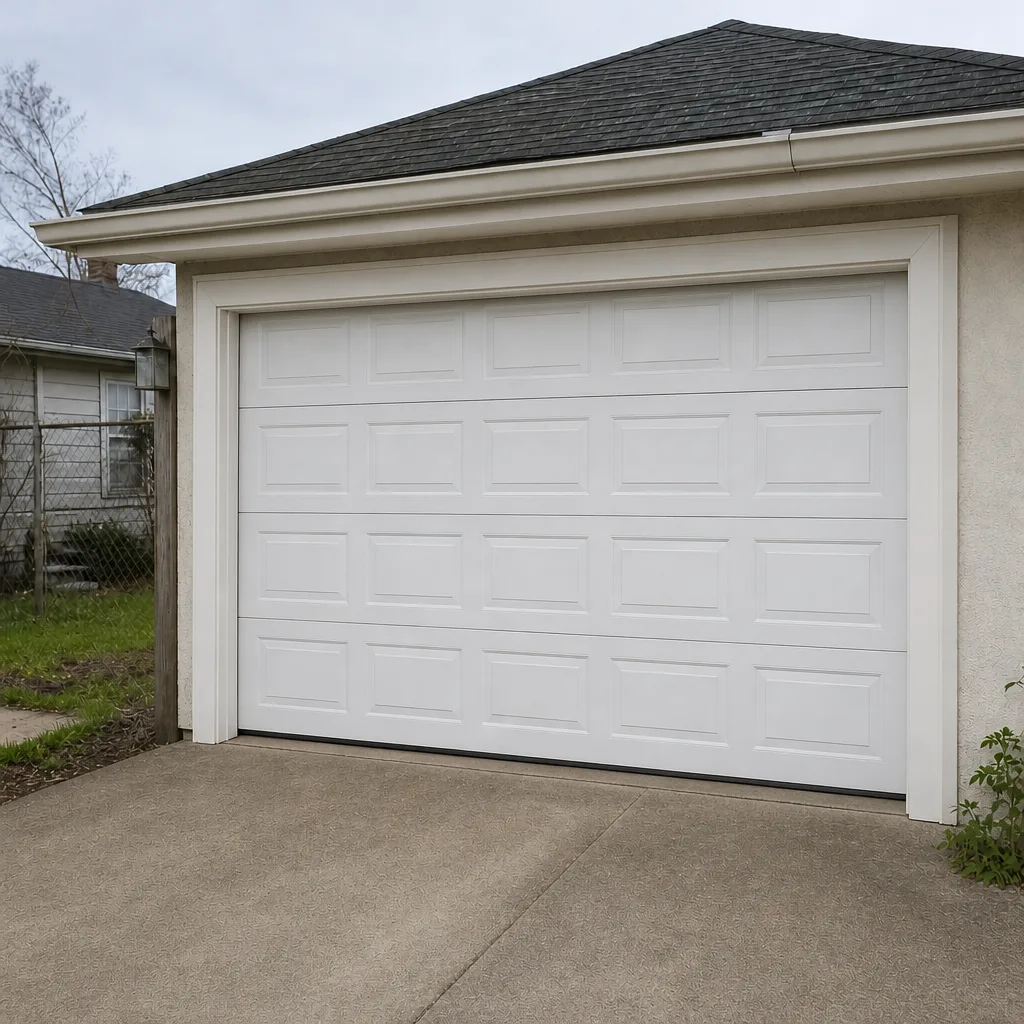
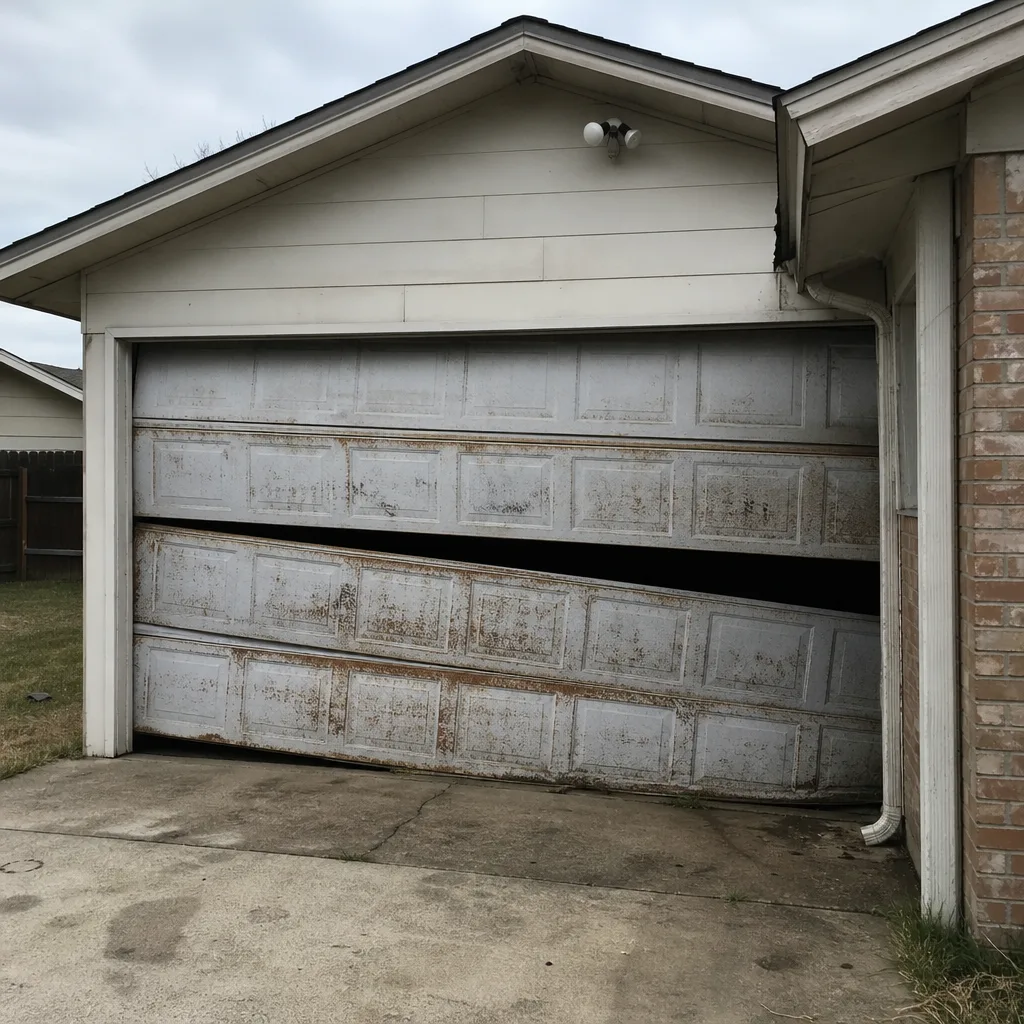
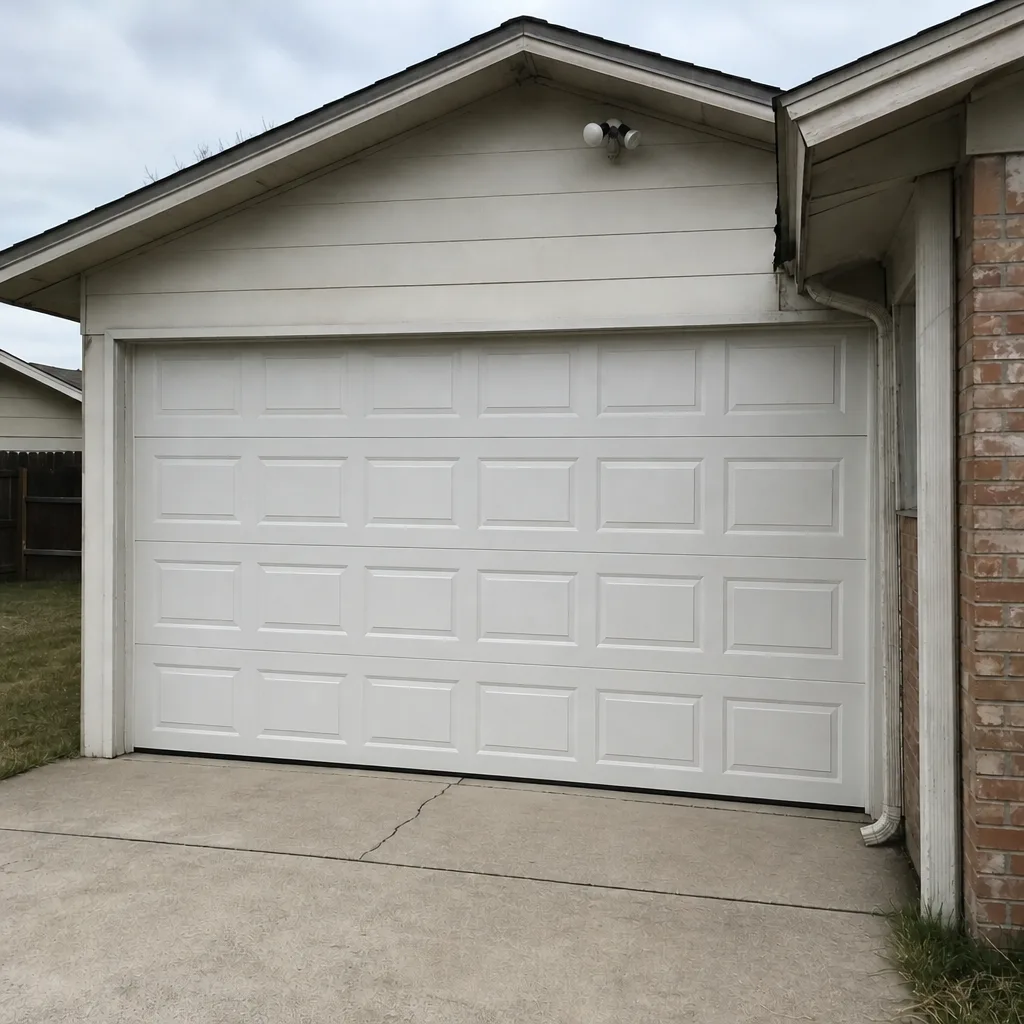
See the difference
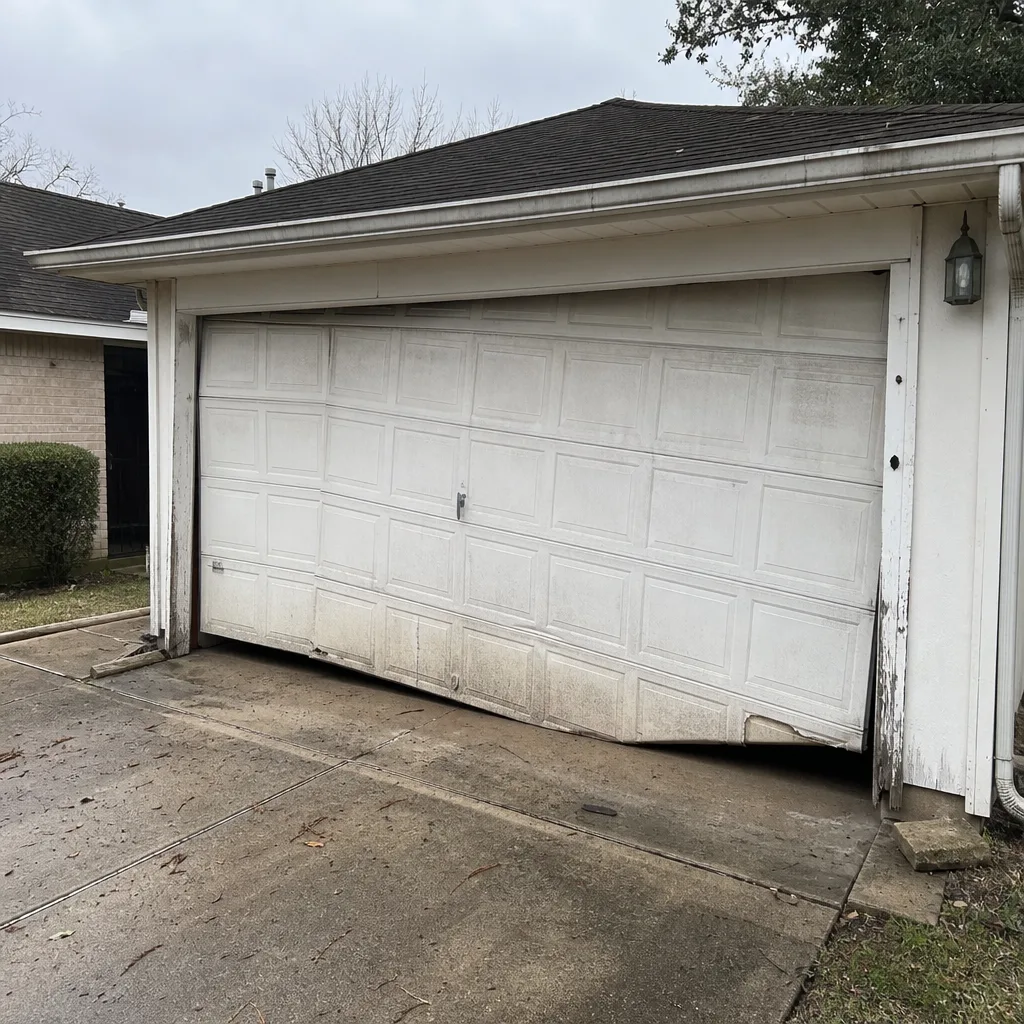 Before
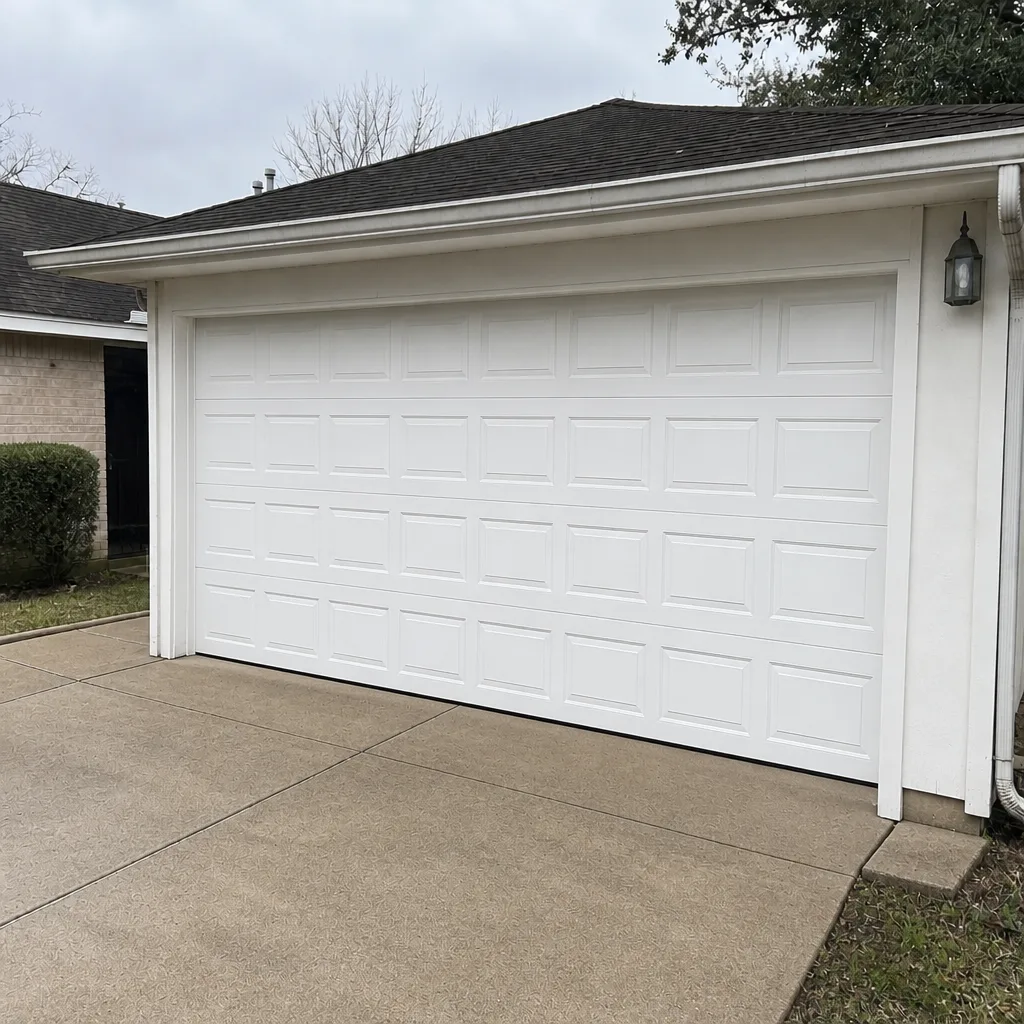 After
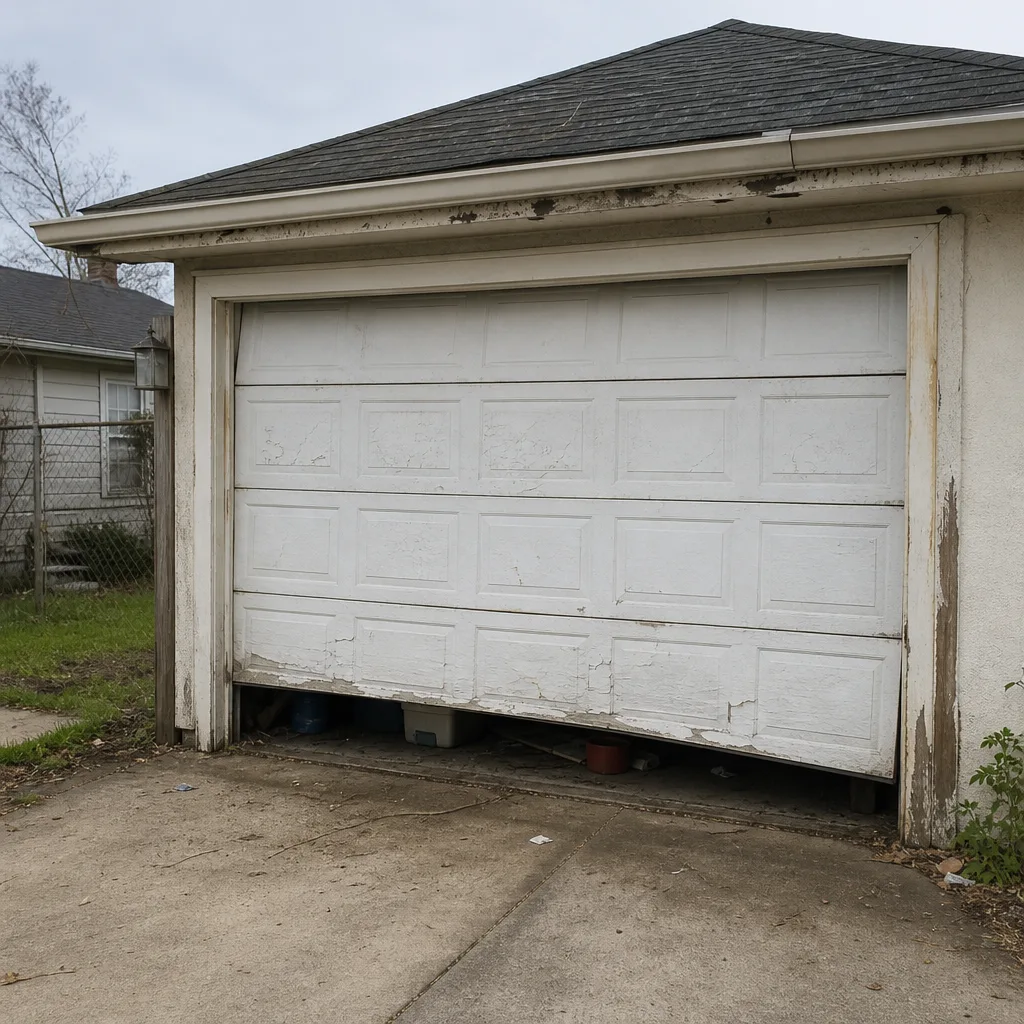 Before
 After
 Before
 After
Common Mistakes to Avoid
- Adjusting travel limits before checking the sensor. Nine out of ten “door won’t close” calls are optical, not travel. Check the beam first, then the limits.
- Spraying WD-40 on the photo-eye lenses. It leaves a residue film that actually increases the fogging problem in Texas City humidity. Use a dry cloth.
- Spraying lubricant on the tracks. Oil on the tracks attracts grit and dust and turns into a paste. The rollers need lubricant; the track surface itself doesn’t.
- Forcing a door with a broken spring. Cycling the opener on a door with a dead spring can burn out the motor and put stress on the tracks. Stop the opener and call for repair.
- Cutting a cable to “release” a jammed door. Never. A jammed door under cable tension can drop or swing. This is the scenario that sends people to the emergency room.
- Ignoring a swollen bottom seal. Swelling wood seals are common in a Gulf Coast climate, and they mimic a sensor problem by creating drag at the floor. If the door reverses low, look at the seal as well as the beam.
- Trusting a generic error code chart across brands. A Chamberlain flashing ten times and a LiftMaster flashing ten times are not the same diagnosis. Ask a brand-familiar technician, not a forum.
- Re-buying an opener when the problem is mechanical. Before replacing the motor, ask whether the springs, cables, or tracks are the actual fault. A new motor on a broken spring fixes nothing.
When to Call a Professional
Call a professional the moment you’re outside the DIY list. That means: a broken spring, a frayed or slack cable, a door off its tracks, a bent track, an opener that tripped a breaker when plugged back in, or a door that’s jammed open with your car inside. It also means any situation where the door moves suddenly or unevenly, or where the opener has switched itself on and off at random. And it means any time you feel unsure. One visit from a trained technician is cheaper than the mistake a spring can make. Texas City Garage Door Repair Pros offers free estimates in Texas City, and we work on your brand: LiftMaster, Chamberlain, Genie, Clopay, Amarr, Wayne Dalton, Craftsman, Raynor. Call (844) 443-3807. We answer 24/7. Fast dispatch from 7am to 7pm, Sunday through Friday.
Frequently Asked Questions
It depends on the fault, and the written estimate you get before work begins is the final price, so you’ll never see a surprise invoice. Spring and cable work, opener logic repair, and sensor alignment all price differently, which is why the phone description matters. Call (844) 443-3807 for a free estimate, and we’ll quote from your description of the symptom.
Yes for repairs we can complete in one visit, and our dispatch runs 7am to 7pm, Sunday through Friday. For same-day repair calls we’ll want your brand and model number up front so we can bring the right parts. Call (844) 443-3807 and describe the symptom; that’s how we get a technician to you with the right spring or opener board.
Because the same blink count means different things on different brand families. Ten flashes on a Chamberlain unit and ten flashes on a LiftMaster unit can trace to different causes on the model. The brand and model label are the key. Give them to the technician on the phone, and you’ll get the right code interpretation the first time.
No. Torsion springs are under hundreds of pounds of stored tension, and getting the winding wrong leads to serious injuries every year. Our technicians handle spring repair as a dedicated specialty, not as a generic line item. If you have a broken spring or a slack cable, stop and call (844) 443-3807 for a free estimate.
Check the photo-eye lens first, then the bottom seal. In Texas City’s humid climate, lens fogging and swollen wood seals both fool the opener into thinking there’s an obstruction at the floor. Clear both and re-test. If the reversing continues, call (844) 443-3807 for a free estimate; the actuator arm or force setting may need adjustment.
Not if the description over the phone was accurate. The written estimate you receive before work begins is the price you pay. That’s why we ask brand, model, symptom, and sounds on the call. If the picture changes once we see the door, we’ll review it with you before touching anything. Call (844) 443-3807 for a free estimate.
Yes. A door stuck open with a car trapped is one of the emergency scenarios we reserve room for in our dispatch. Call (844) 443-3807, describe the door and the brand on the opener, and we’ll get a technician out. We answer 24/7. Fast dispatch from 7am to 7pm, Sunday through Friday.
The Bottom Line
Almost every garage door problem follows a predictable path from symptom to cause. Read the door before you touch it: observe the reversal point, the sound, and the opener light. Then follow the decision tree. Sensor alignment, travel limits, and photo-eye cleaning are yours. Springs, cables, drums, and tracks belong to a technician. And when you describe the problem on the phone with your brand, model, and symptom, you’ll get a real quote instead of a diagnostic visit. That’s how a Texas City homeowner gets a door that works, without the wasted call. Call (844) 443-3807 for a free estimate from Texas City Garage Door Repair Pros.
Written by the team at Texas City Garage Door Repair Pros.