
Last updated November 23, 2026
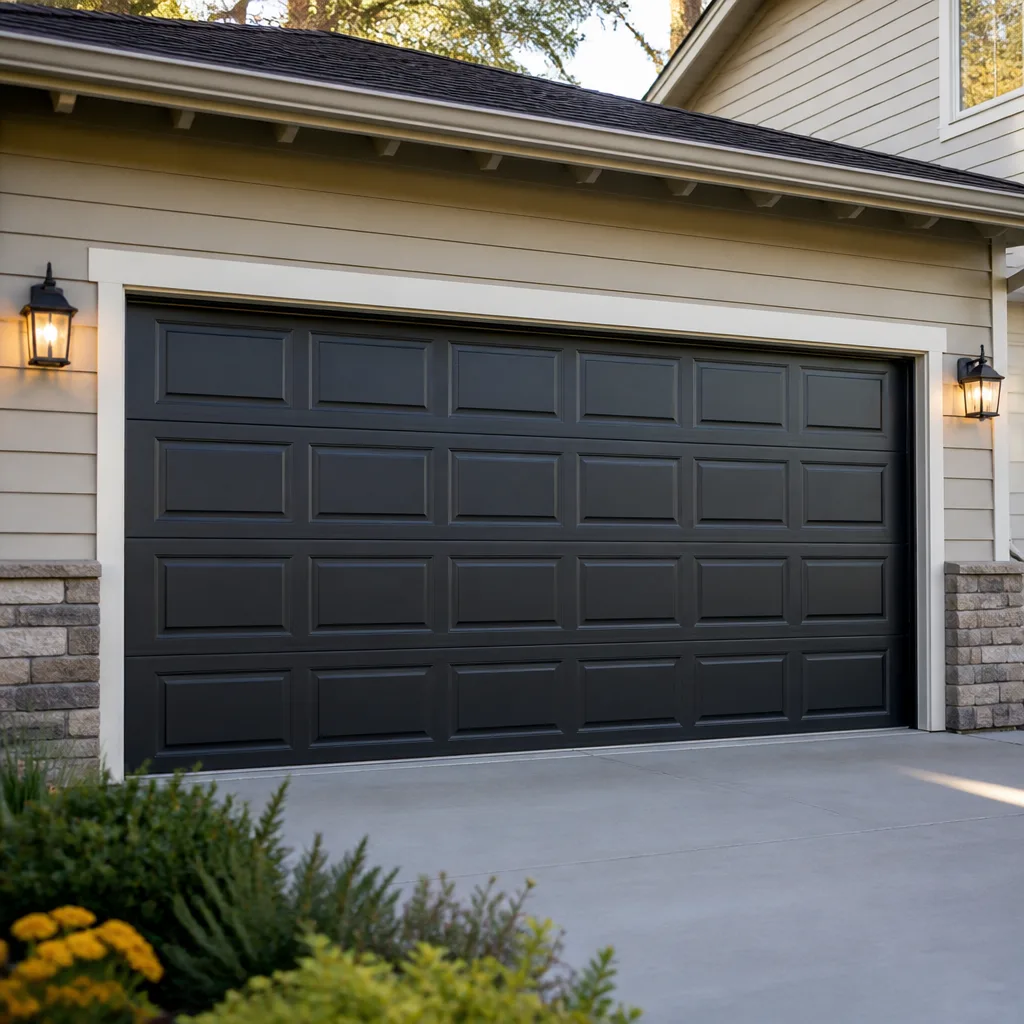 Raised-panel steel
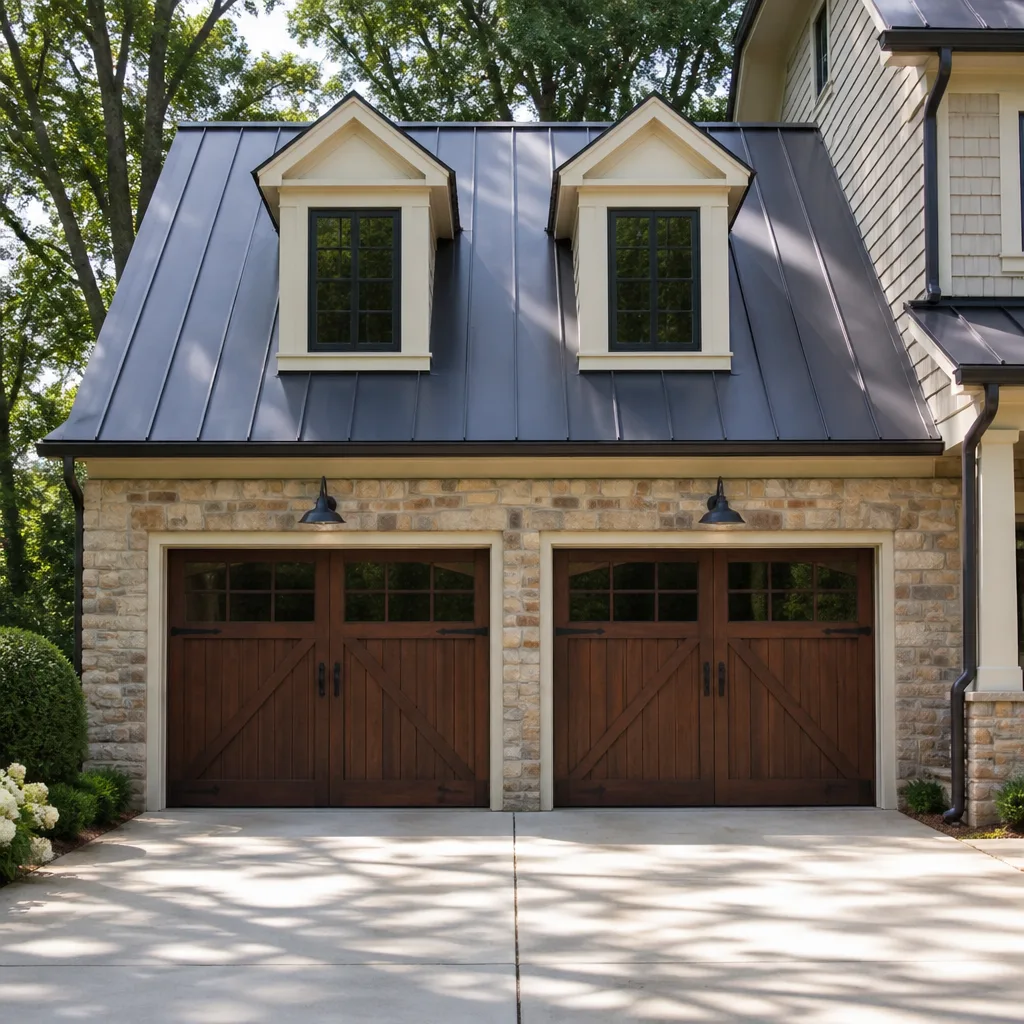 Carriage house
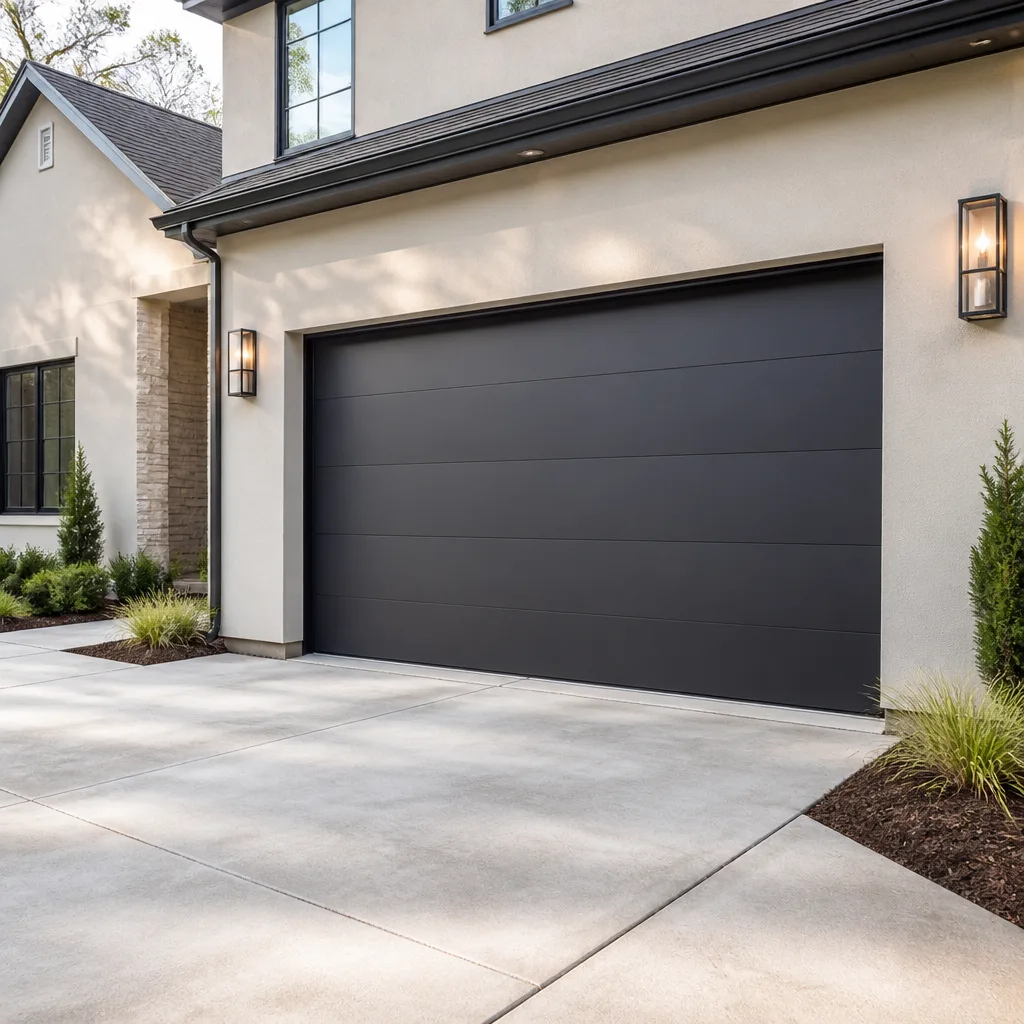 Modern flush
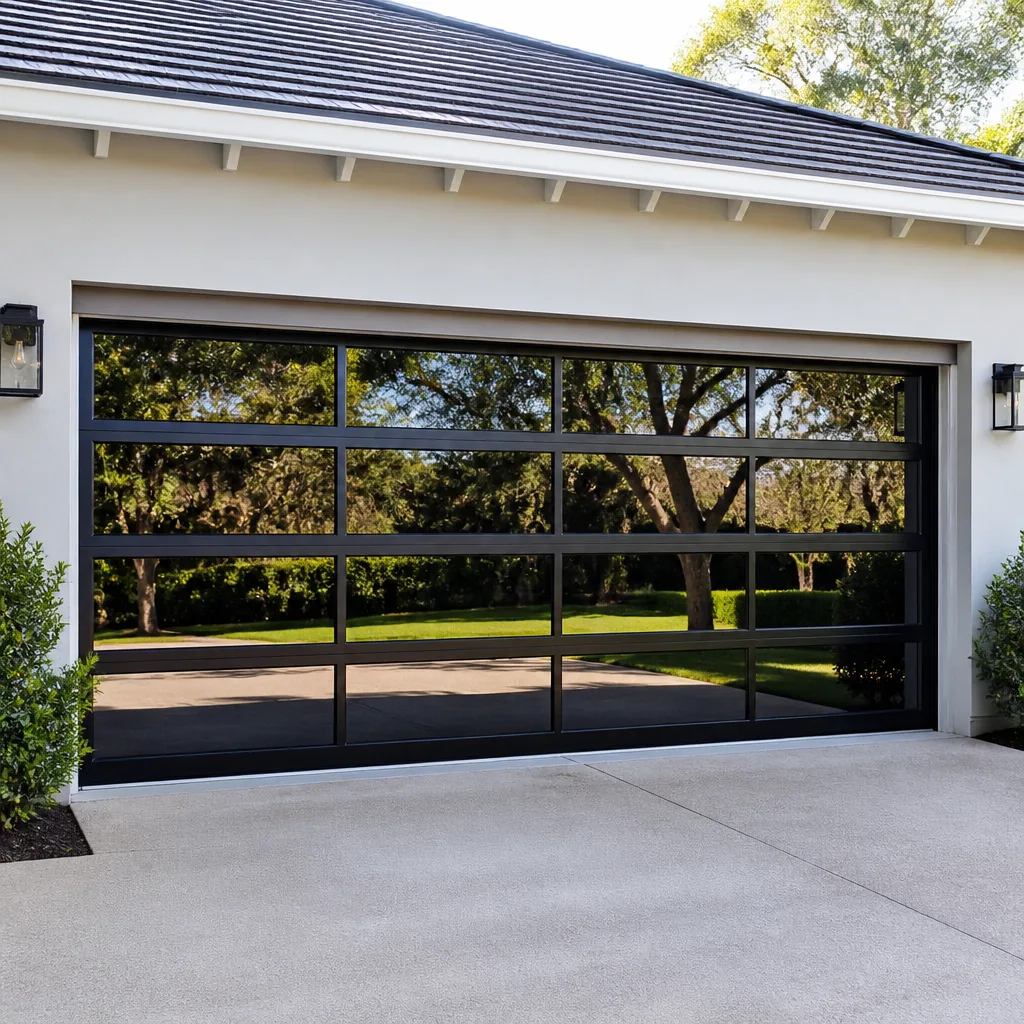 Full-view glass
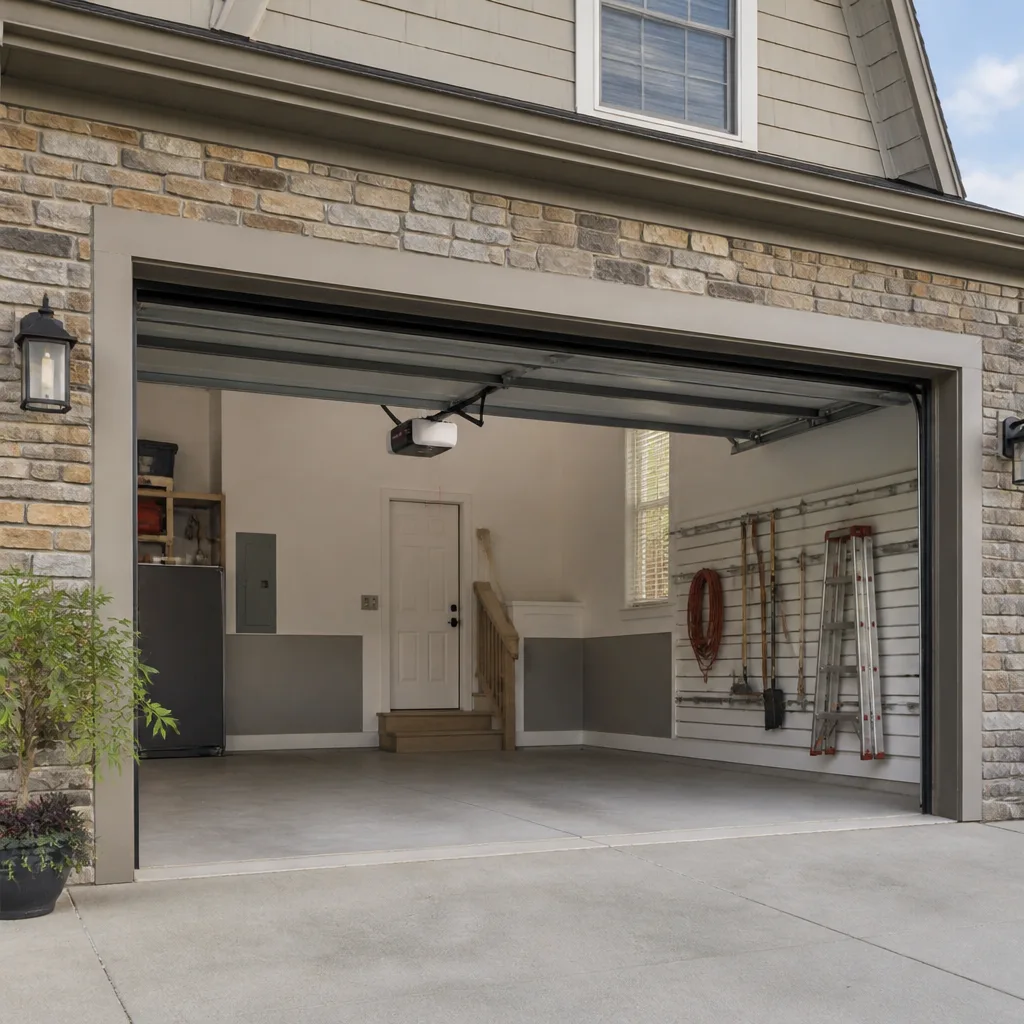 LiftMaster openers
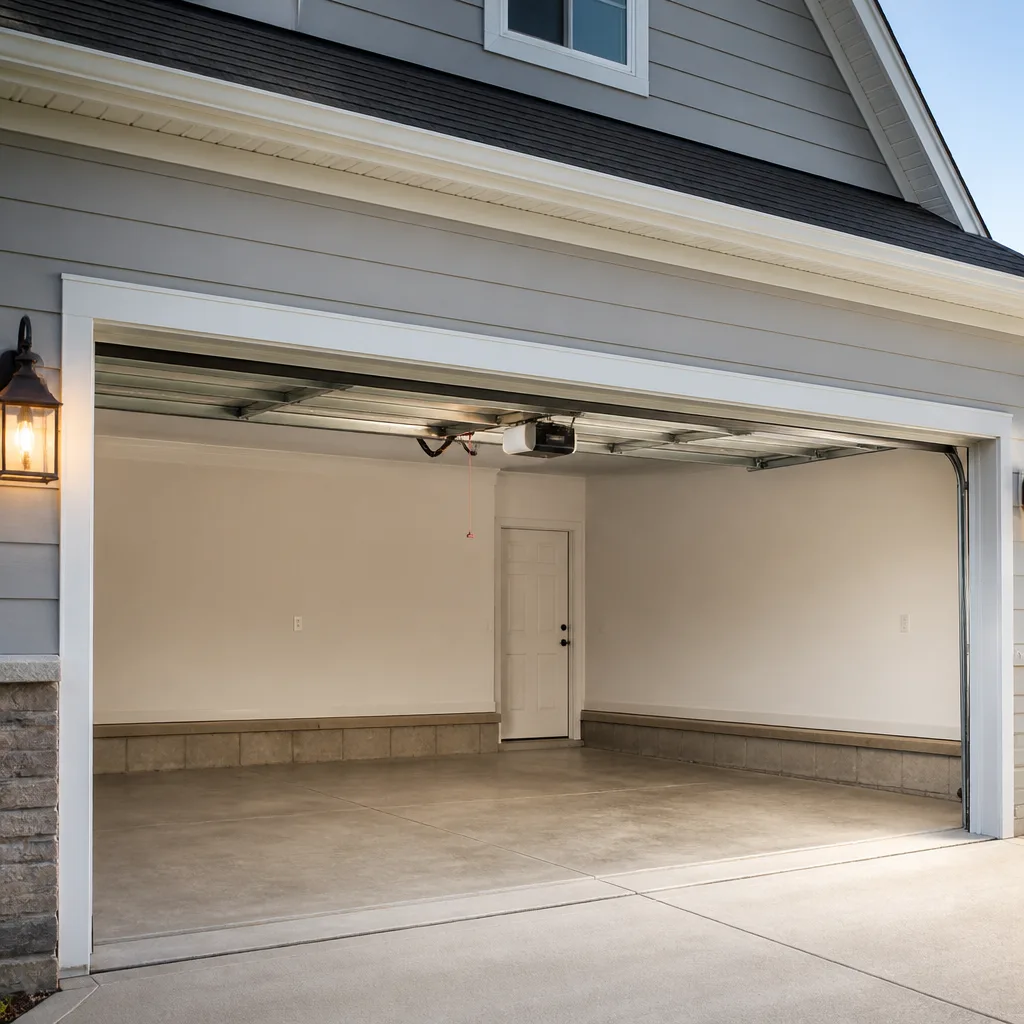 Chamberlain openers
Full 25-point door and opener safety check with every visit - springs, cables, rollers, tracks, and your LiftMaster or Chamberlain opener included
You get a price before we start. It does not change when the pro arrives.
Get your free estimateThe Complete Guide to Garage Doors in Texas City
Most garage door guides you’ll find online were written for Phoenix or Denver, and the advice shows it. Texas City sits on Galveston Bay, where humid air and salt off the water do quiet, steady damage to the metal parts that make your door move. A standard torsion spring here fights corrosion its whole working life, and that changes how often you should inspect, lubricate, and replace components. This guide covers what actually holds up in Texas City, how the climate and local construction shape your door, and what to check before you call anyone.
Quick Answer
A garage door in Texas City needs more frequent inspection and lubrication than national guides suggest, because humid, salt-laden Gulf air accelerates corrosion on springs, cables, hinges, and bottom seals. Plan on looking your door over every few months, using corrosion-resistant hardware, and choosing door materials that tolerate moisture. When a spring snaps, an opener fails, or a door comes off its tracks, that’s professional work.
Styles & brands we work with
- Raised-panel steel
- Carriage house
- Modern flush
- Full-view glass
- LiftMaster openers
- Chamberlain openers
Table of Contents
- How the Gulf Climate Affects Your Garage Door
- Wind Load Ratings and What They Mean in Texas City
- Materials That Hold Up Here
- The Brands You’ll See in the Houston-Galveston Market
- Slab-on-Grade Construction and Your Door Seals
- The Real Maintenance Cadence for a Texas City Door
- Springs, Cables, and Opener Basics
- Common Mistakes to Avoid
How the Gulf Climate Affects Your Garage Door
Garage doors are mechanical systems made largely of steel, and steel in a humid, salt-laden environment corrodes faster than the same steel in a dry climate. That’s the single most important thing to understand about owning a door in Texas City. The springs, cables, hinges, rollers, and bottom seal are all exposed to that air every day the door is closed and every time it opens to the outside.
What that means in practice:
- Torsion and extension springs are under constant tension and coated with a thin finish. Humid air and airborne salt work at any nick or thin spot until rust pits the wire, and a pitted spring is weaker and more likely to break.
- Cables are braided steel running inside the spring system or along the tracks. They stretch and fray, and moisture speeds that along.
- Bottom seals and weatherstripping are rubber or vinyl. In a moist climate they stiffen, crack, and pull away, which lets more humid air into the garage.
- Hinges and rollers dry out and rust if the door isn’t lubricated on a regular schedule.
None of this happens overnight. The point is that a door in Texas City ages differently than a door in a dry climate, and treating the maintenance schedule as if you live somewhere else costs you. More on that cadence below.
Wind Load Ratings and What They Mean in Texas City
A garage door is usually the largest opening in a house, and that makes its wind resistance a structural matter, not a cosmetic one. Texas City’s coastal setting and its exposure to hurricane-season winds mean a door that isn’t rated and reinforced for wind pressure can be a real weak point in a home’s envelope.
Wind load ratings describe how much pressure a door and its hardware can withstand without failing. Doors are tested and labeled, and a properly rated door relies on more than the panels. The reinforcement struts, the track brackets, and even the way the door is anchored to the framing all contribute to whether it holds up under load.
What to know before you buy or replace:
- Ask your city’s building department what wind provisions apply to your property, since requirements can vary by zone and by whether the door faces open water.
- A rated door only performs at its rating if it’s installed with the matching reinforcement and hardware. A high-rated door on standard brackets doesn’t deliver what the label promises.
- When you compare quotes, ask whether the wind rating applies to the complete system as installed, not just the panels.
- If your home has an older door with no rating label, a professional can assess whether it makes sense to reinforce it or replace it.
This is one area where local knowledge matters. A contractor who installs the same way all over the country may not be thinking about coastal exposure. For a closer look at how this plays into repairs and reinforcement, our garage door repair page covers what a wind-related fix typically involves.
Materials That Hold Up Here
The door material question has a different answer in Texas City than it does inland. Here, moisture tolerance matters as much as looks or price.
- Steel doors are the most common choice and are affordable. The trade-off is that steel dents and rusts, especially at the bottom edge where water and humid air collect. A steel door can work well here if it’s kept painted and sealed and its hardware is maintained.
- Aluminum doors resist rust but dent more easily. Good for homeowners who want something lighter and more resistant to corrosion.
- Fiberglass and composite doors won’t rust at all and tolerate moisture well. They cost more up front but hold up in humid air.
- Wood doors need regular sealing and refinishing here. Humidity swings wood, and a wood door that isn’t maintained can warp and bind.
Whatever the panels are made of, the hardware matters just as much. Stainless or galvanized fasteners, sealed hinges, and a good quality bottom seal are worth specifying. When you’re choosing a door, ask specifically how the hardware and seals are rated for moisture. That one question separates a door that lasts from one that starts failing at the bottom edge first.
The Brands You’ll See in the Houston-Galveston Market
Homeowners around the Houston-Galveston area end up with a fairly predictable set of manufacturers, and knowing which is on your door helps you get the right parts. Genie openers are common on older installs, while Clopay and Amarr doors show up frequently on newer homes, and Wayne Dalton doors and openers are widespread across the region.
The reason this matters isn’t brand loyalty. It’s that each manufacturer uses its own spring sizes, opener programming sequences, and hardware. An opener from a brand like Genie programs differently than one from another maker. A Clopay or Amarr door may use specific track brackets or hinge profiles. When a technician already knows your system, diagnosis is faster and there’s less back-and-forth trying to match a part.
At Texas City Garage Door Repair Pros, we’re factory-familiar with eight of the dominant brands in the industry: LiftMaster, Chamberlain, Genie, Clopay, Amarr, Wayne Dalton, Craftsman, and Raynor. That covers both the door makers and the opener makers, so we’re working with the hardware that’s actually on your house rather than feeling it out.
Slab-on-Grade Construction and Your Door Seals
Most homes in this part of Texas are built on a concrete slab rather than over a raised foundation or basement. That’s normal for the region, but it has a practical consequence for your garage door: the door has to seal tightly against a concrete floor that may not be perfectly level, and any gap lets in humid outside air and pests.
Two things follow from that:
- Jamb alignment matters. If the wall framing or the door jamb settles even a little, the door can rub, bind, or leave gaps along the sides and top. On a slab, there’s less give in the structure, so a small misalignment shows up as uneven seal contact rather than being absorbed by flexing wood.
- The bottom seal is a wear item here. A stiff or cracked seal is more than a draft. It lets humid air and water reach the bottom edge of the door and the floor track, and it lets in insects.
Check your seal by closing the door and looking for light along the bottom and sides. If you can see it, air and moisture are getting in. Replacing a bottom seal and adjusting the door to sit squarely is routine work, and it’s one of the highest-value fixes for a Texas City home because it protects everything behind it.
The Real Maintenance Cadence for a Texas City Door
National guides often say “service your garage door once a year.” That advice is written for milder, drier climates. In humid, salt-laden air, once a year isn’t enough.
Here’s a schedule that fits Texas City:
- Every few months: lubricate the springs, hinges, rollers, and track with a garage-door lubricant (not WD-40, which is a solvent, not a lubricant). Wipe off dirt and any surface rust with a stiff brush.
- Every few months: test the door’s balance by disconnecting the opener and lifting it halfway. It should stay put. A door that drifts down or springs up needs adjustment.
- Every few months: run the safety reverse test. Place a small object in the door’s path and confirm it reverses on contact.
- Twice a year: inspect springs and cables for rust, fraying, or gaps. Look closely at the bottom edge of the door and the base of the tracks.
- Twice a year: check the bottom seal and weatherstripping for cracks and gaps, and replace as needed.
- Twice a year: look at the paint or finish on a steel or wood door and touch up any spots where the surface has broken.
That cadence is roughly double the “once a year” advice because corrosion is a year-round process in this climate, not a seasonal one. And never test a spring or cable by hand. Those parts are under heavy tension and can cause serious injury. Visual inspection only.
Springs, Cables, and Opener Basics
Springs do the heavy lifting on a garage door. A torsion spring is mounted above the door and twists to counterbalance the door’s weight; extension springs run along the sides. Either way, the spring is under high tension every moment the door is closed, and it’s the part that fails most dramatically.
Spring repair is genuinely high-tension work, and this is where choosing the right person matters most. A worn or broken spring can store enough energy to cause serious injury, which is why we handle spring repair as a dedicated specialty rather than treating it like any other repair. If your spring is broken, don’t try to open the door by hand and don’t attempt the repair. Call a professional.
On the opener side, modern systems have moved well beyond a simple motor. Smart openers from LiftMaster and Chamberlain (through MyQ) and from Genie connect to phone apps, integrate with home systems, and have their own pairing and programming quirks. If your opener won’t respond, the problem may be the app layer or a WiFi connection rather than the motor itself. Our garage door opener repair covers both legacy and connected systems, and our garage door spring repair page explains what spring work involves. If you’re trying to figure out whether it’s a spring or an opener problem, that’s often the first thing we sort out on a call.
Common Mistakes to Avoid
- Following a “once a year” maintenance schedule. That advice was written for dry climates. In Texas City’s humidity, once a year leaves too much gap between lubrications and inspections.
- Using the wrong lubricant. WD-40 and other solvents strip existing lubrication and attract grit. Use a purpose-made garage door lubricant on springs, hinges, and rollers.
- Ignoring rust on springs and cables. A little surface rust can be cleaned off. Deep pitting means the part is weakened, and that’s when it breaks. A pitted spring needs replacing, not painting.
- Buying a wind-rated door without the matching hardware. The rating only holds if the reinforcement and brackets match the door. Ask how the rating applies to the installed system.
- Skipping the bottom seal. A cracked seal lets humid air and pests in and is one of the cheapest fixes with the biggest effect on the door’s longevity.
- Attempting spring or cable work yourself. These parts hold dangerous tension. Visual inspection is fine; adjusting or replacing them is not a DIY job.
- Assuming an opener problem is the opener. Often it’s a door that’s binding, out of balance, or misaligned, which overloads the motor. Fixing the door can solve the “opener” problem.
See the difference
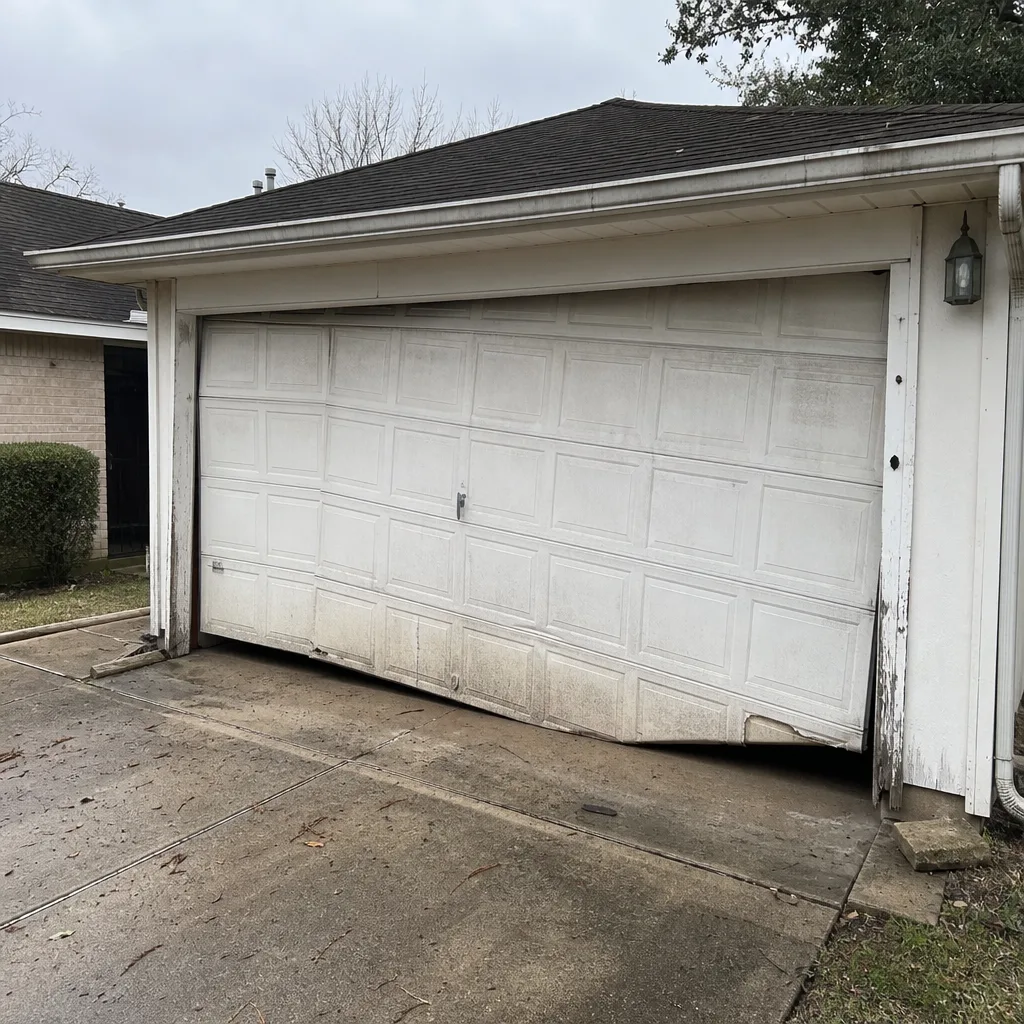 Before
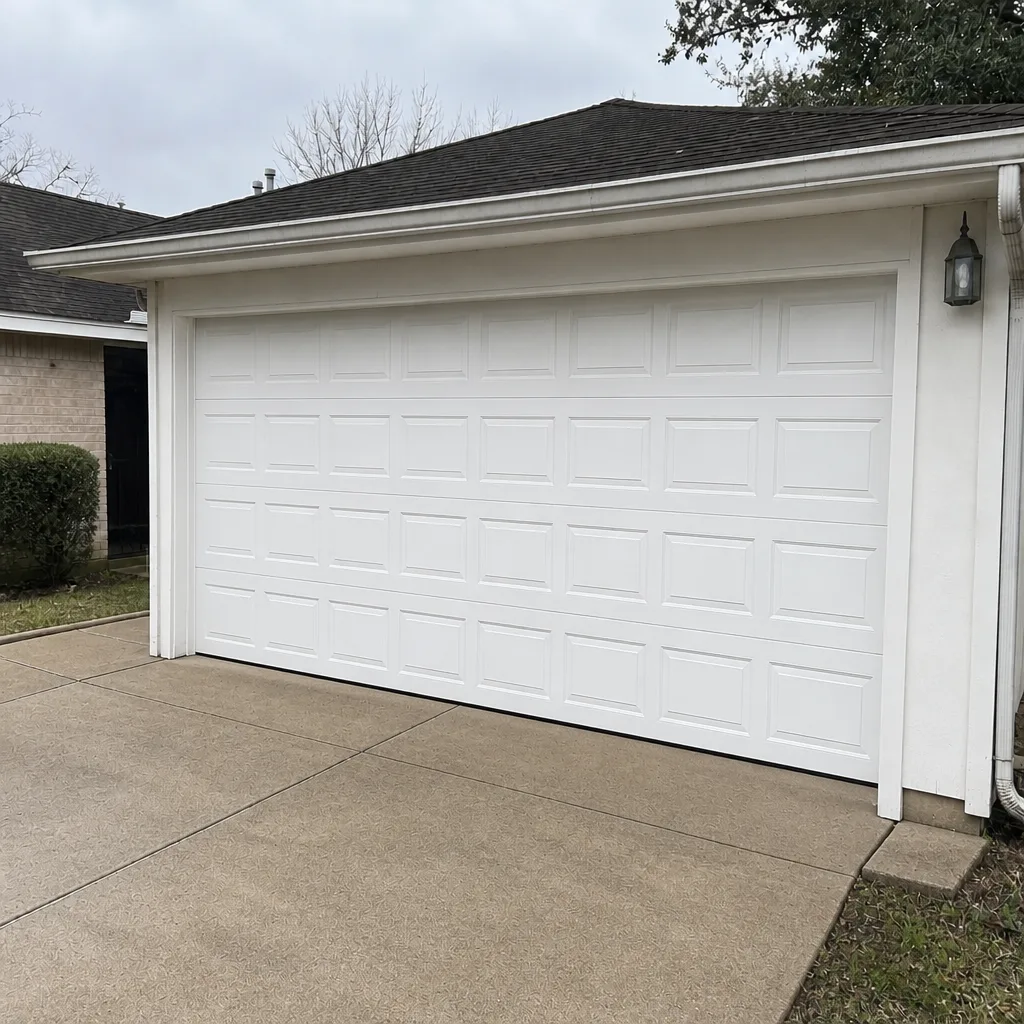 After
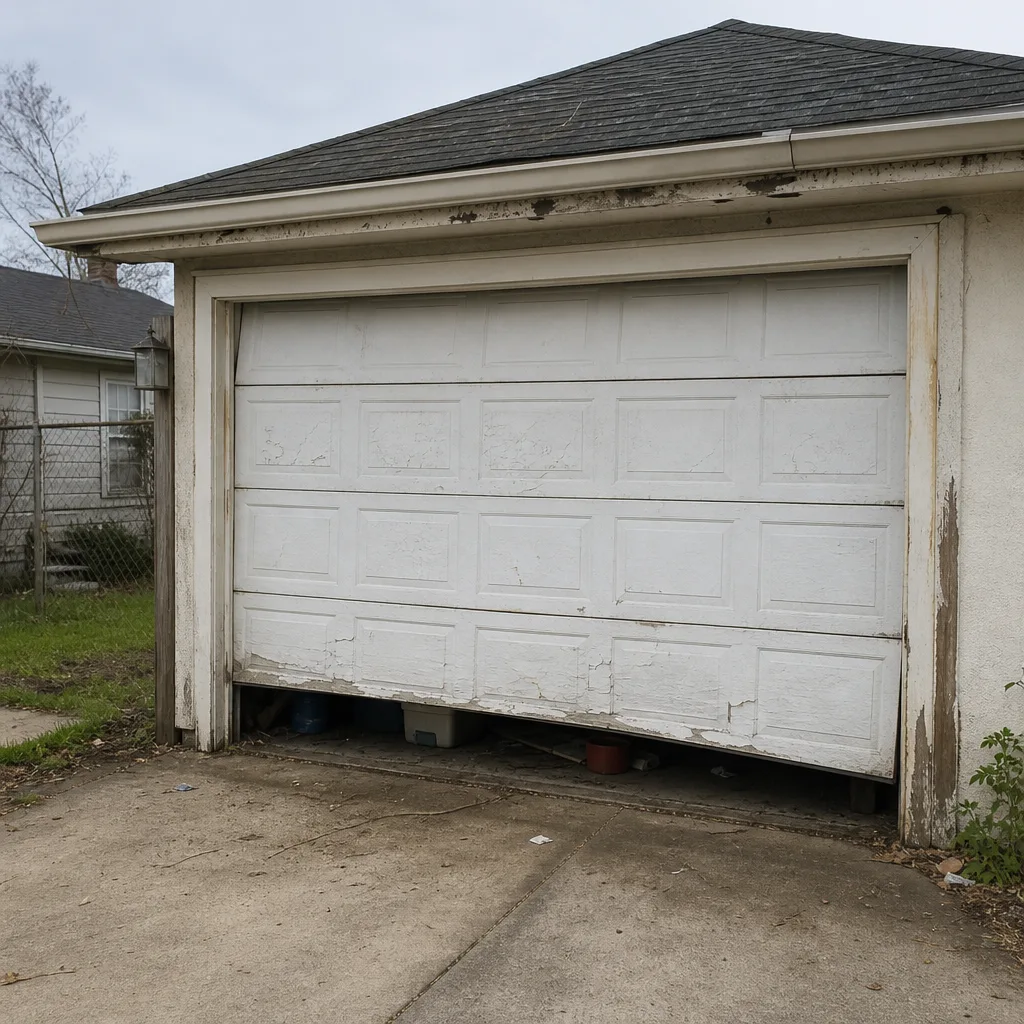 Before
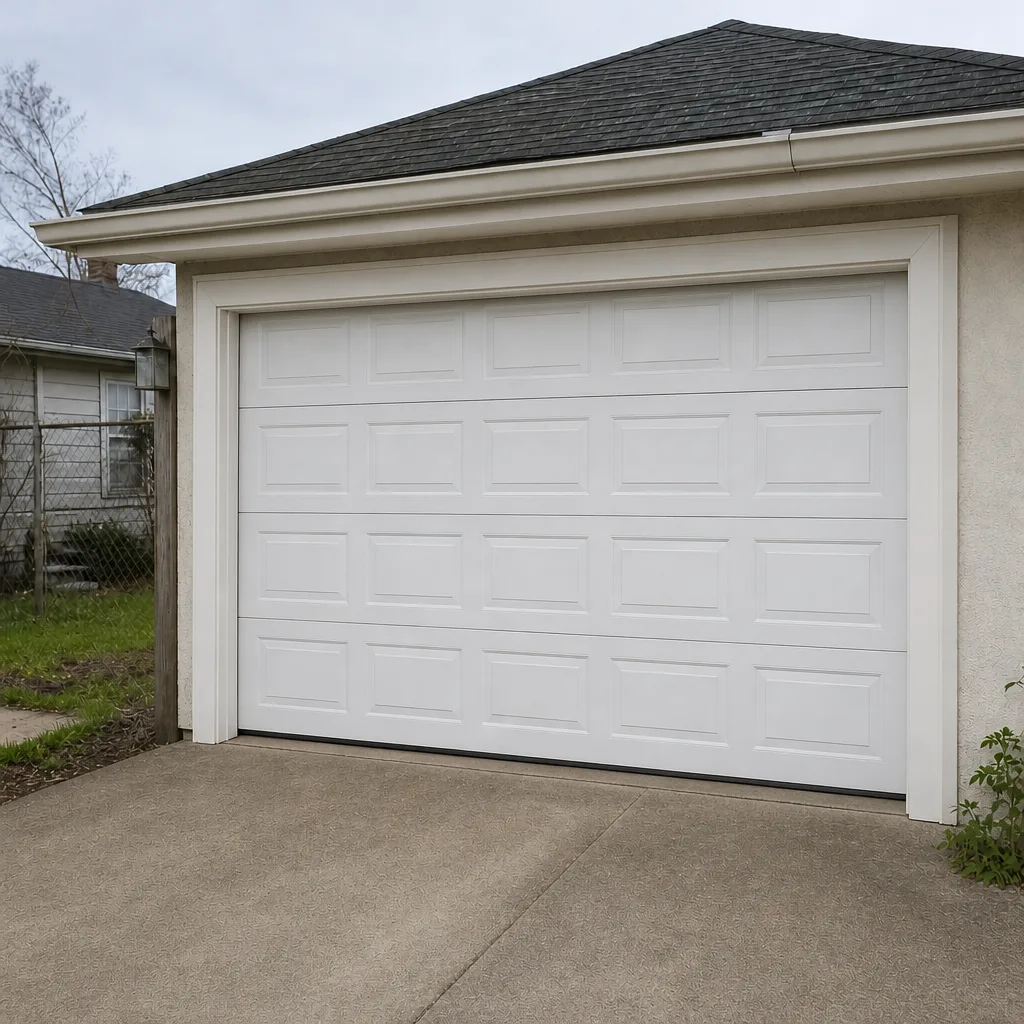 After
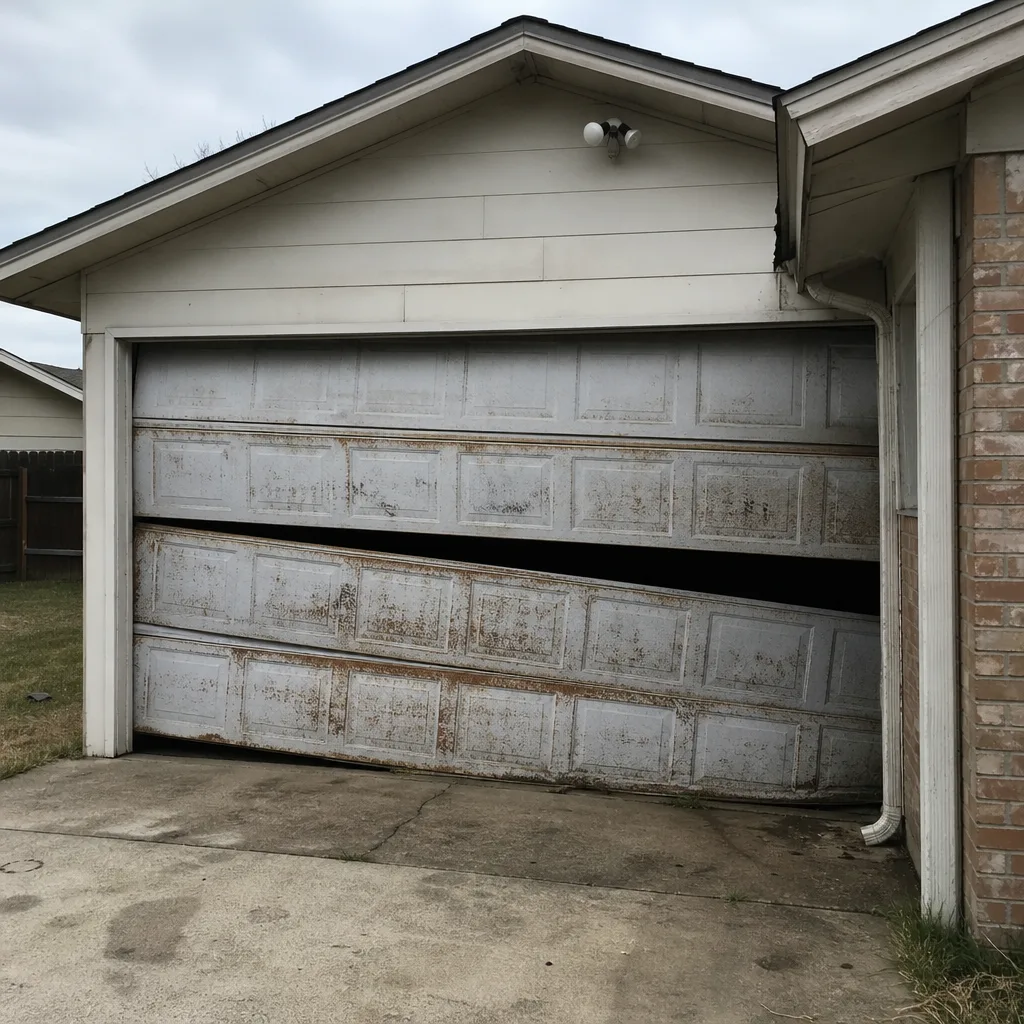 Before
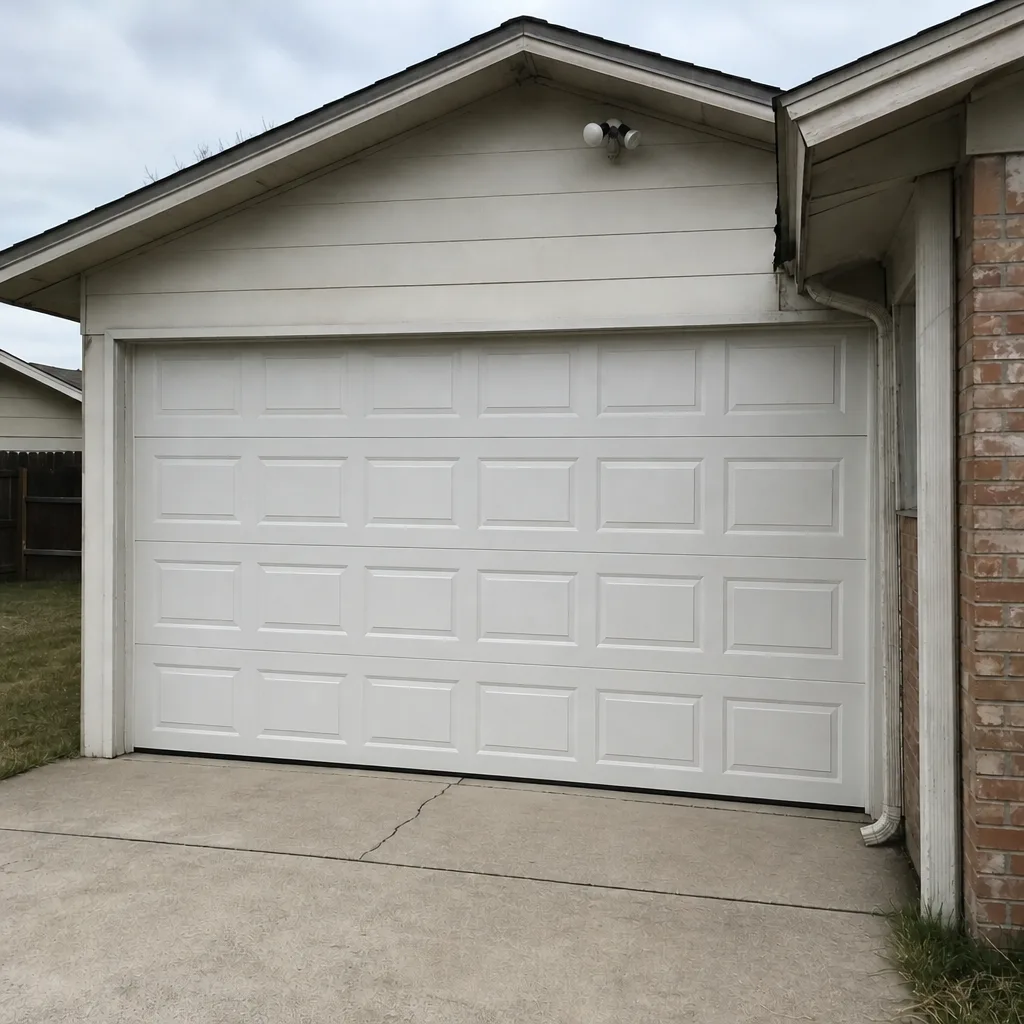 After
When to Call a Professional
Some garage door problems are safe to inspect and handle yourself, and some aren’t. Call a professional when a spring is broken or looks deeply rusted, when a cable is frayed or loose, when the door comes off its tracks or hangs crookedly, when the opener runs but the door doesn’t move, when the door reverses unexpectedly, or when you’re locked out and can’t get in. Also call when you’re planning a replacement, because getting the wind rating and hardware right is a professional call, not a guess.
Texas City Garage Door Repair Pros offers free estimates in Texas City. We answer 24/7, and fast dispatch runs from 7am to 7pm. Call (844) 443-3807 for a free estimate.
Frequently Asked Questions
Aim for lubrication and inspection every few months, and a more thorough spring, cable, and seal check twice a year. That’s more frequent than the once-a-year advice in national guides because humid, salt-laden air speeds corrosion. Call (844) 443-3807 if you’d like a professional inspection.
Because humid, salt-laden air corrodes the steel wire in the spring, and a corroded spring is weaker and breaks sooner. It’s a climate effect, not a defect. A professional can tell you whether your spring is showing wear before it fails.
You should ask your city’s building department what wind provisions apply to your property, since requirements vary. A wind-rated door only performs at its rating if it’s installed with the matching reinforcement and hardware. When you get quotes, confirm the rating applies to the installed system.
Aluminum, fiberglass, and composite resist rust and humidity best; steel can work if it’s kept painted and sealed; wood needs regular sealing in this climate. The hardware and seals matter as much as the panels, so ask about both. Call (844) 443-3807 to talk through options for your home.
Yes, same-day service is often possible for repairs. We answer 24/7, and fast dispatch runs from 7am to 7pm, Sunday through Friday. For installations and replacements, we schedule a measure and a written price instead.
The local pros we connect you with are licensed and insured as their state requires. Our technicians have up to 9 years of experience and are familiar with the major brands on your door. Call (844) 443-3807 for an exact quote, and estimates are free.
The Bottom Line
Owning a garage door in Texas City means dealing with a climate that treats metal differently. That means more frequent lubrication and inspection, attention to rust on springs and cables, a wind-rated door and matching hardware if you’re replacing, and a good bottom seal to keep humid air out. None of it is complicated, but the local details matter more than generic advice. Keep an eye on the parts that move, handle the small fixes early, and leave spring and cable work to a professional.
Call (844) 443-3807 for a free estimate from Texas City Garage Door Repair Pros. We answer 24/7, and fast dispatch runs from 7am to 7pm, Sunday through Friday. You can also read more about our full range of services on our Texas City Garage Door Repair Pros home page.
Written by the team at Texas City Garage Door Repair Pros.