
Last updated November 23, 2026
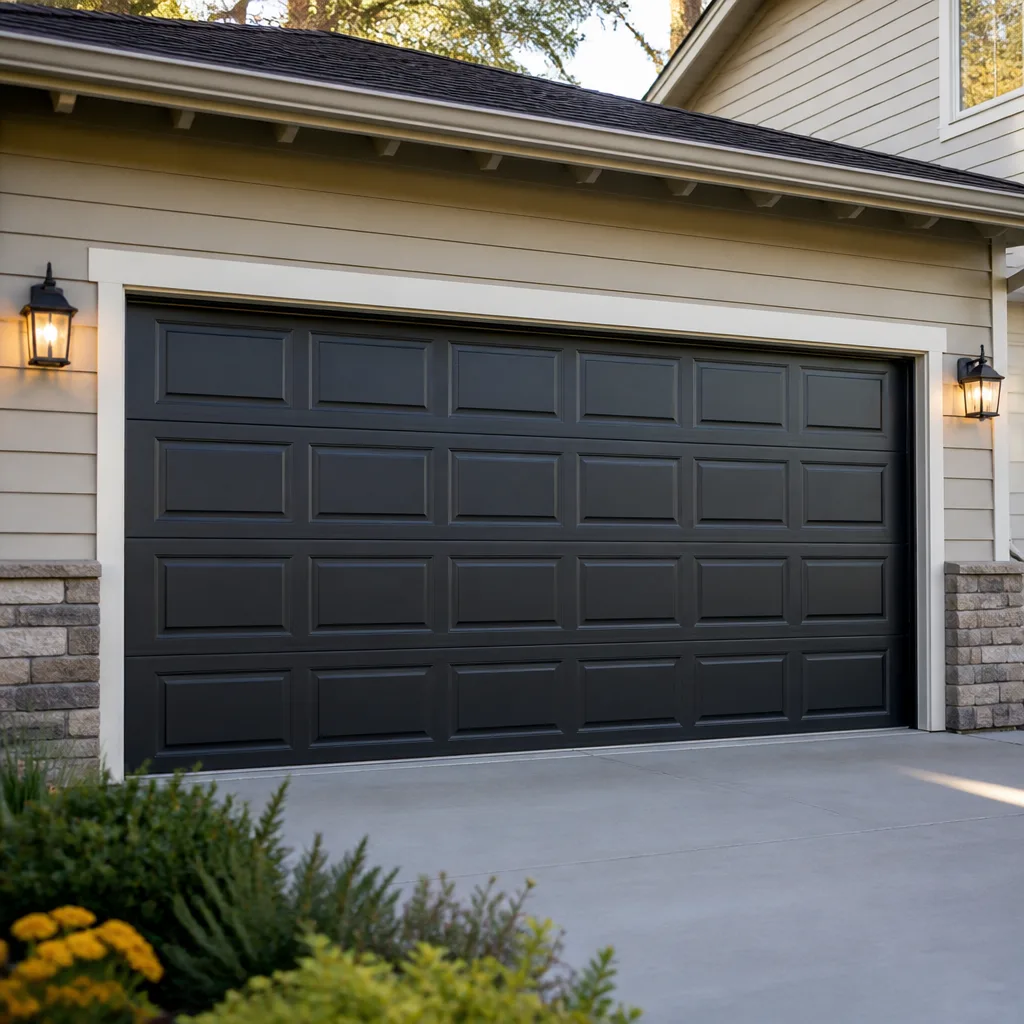 Raised-panel steel
 Carriage house
 Modern flush
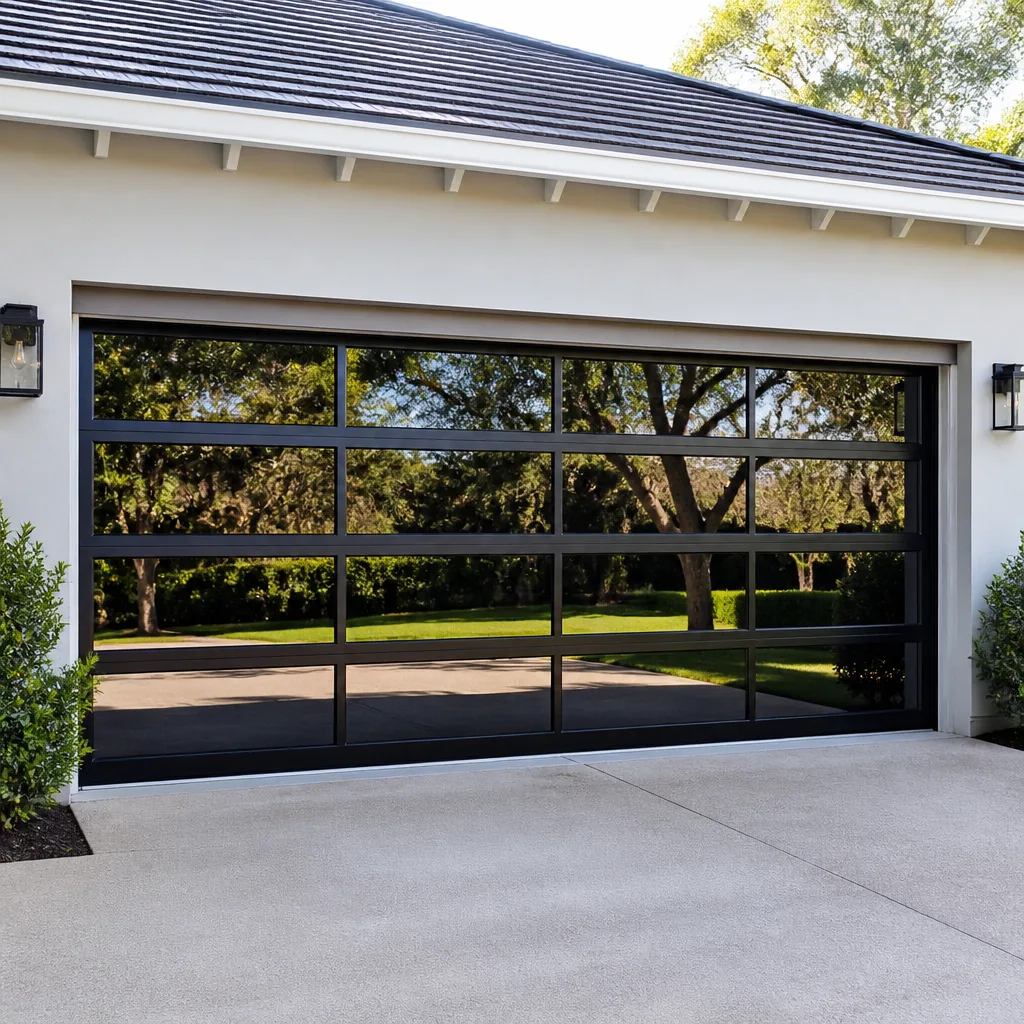 Full-view glass
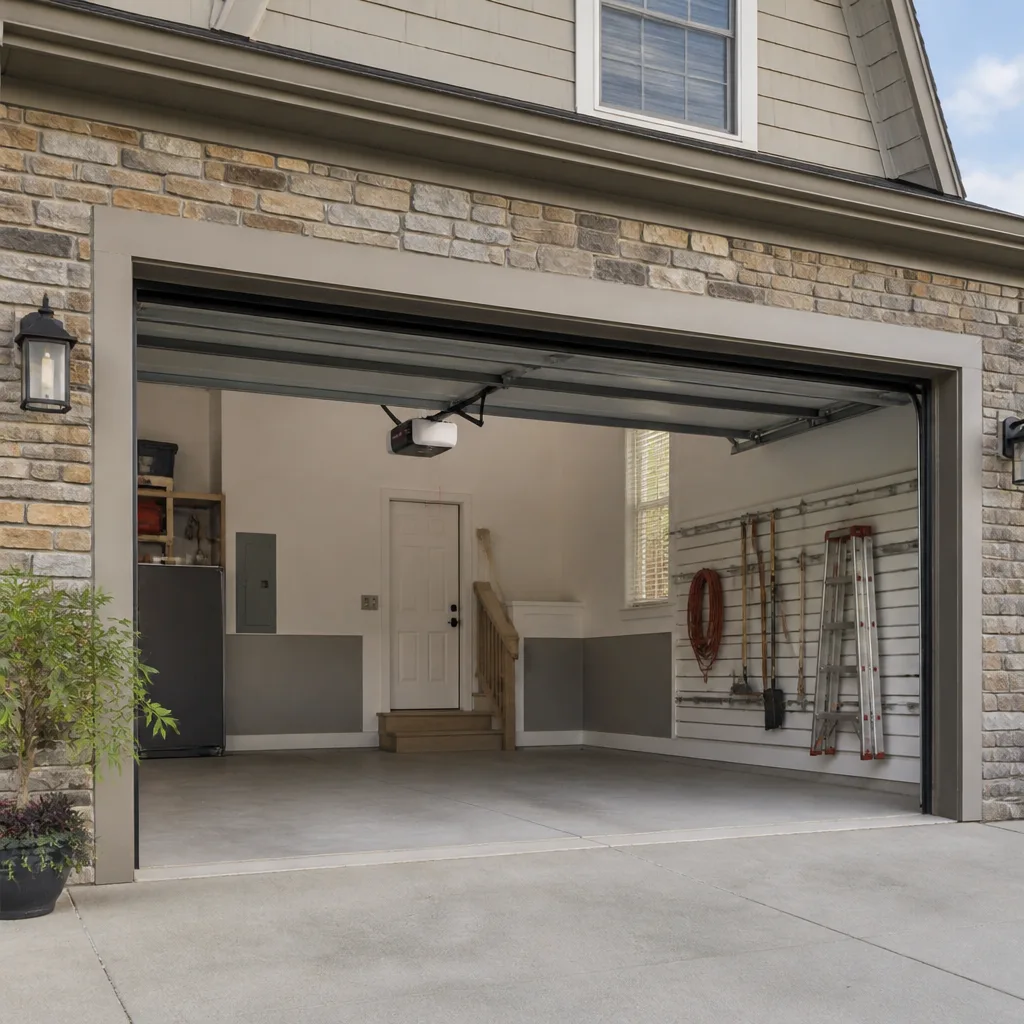 LiftMaster openers
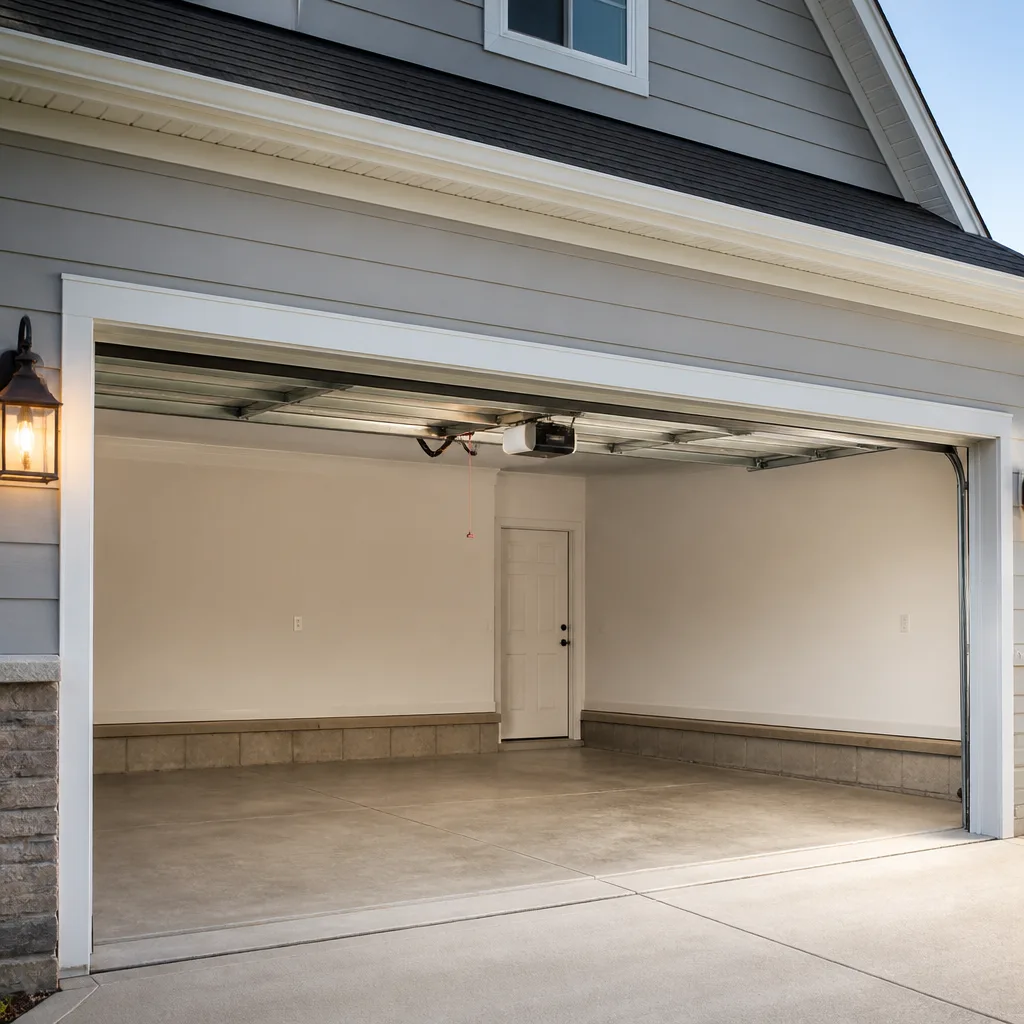 Chamberlain openers
Full 25-point door and opener safety check with every visit - springs, cables, rollers, tracks, and your LiftMaster or Chamberlain opener included
You get a price before we start. It does not change when the pro arrives.
Get your free estimateDIY vs Professional Garage Door: The Texas City Homeowner’s Decision Guide
Most DIY-versus-professional debates get framed as a question of skill, and that framing is wrong. Plenty of Texas City homeowners are perfectly capable of resetting a safety sensor or swapping a bottom seal. The real line isn’t drawn at “handy” and “not handy.” It’s drawn at physics and paperwork: a handful of garage door tasks store enough energy to hurt you badly when something slips, and a few of them quietly cancel the warranty on parts you already own. Everything else is fair game for a Saturday morning. This guide sorts the whole job task by task, so you know exactly where to stop and where calling a pro is just common sense.
Quick Answer
DIY is safe and smart for the low-tension, low-risk parts of a garage door: safety sensors, lubrication, remote and keypad programming, weatherstripping, and visual inspections. Torsion springs, extension springs, lift cables under tension, and structural track realignment are never DIY tasks. They involve stored force that can cause serious injury, and working on them often voids manufacturer warranties on the spring and the opener. When in doubt, call a trained technician.
Styles & brands we work with
- Raised-panel steel
- Carriage house
- Modern flush
- Full-view glass
- LiftMaster openers
- Chamberlain openers
Table of Contents
- Why Garage Door Work Is Different From Other Home Repairs
- The DIY-Safe List: Tasks Any Capable Homeowner Can Handle
- The Never-DIY List: Tasks That Can Put You in the Hospital
- Tools for the Jobs You Can Do vs. the Tools Spring Work Actually Requires
- How DIY Spring Work Affects Your Manufacturer Warranty
- The Texas City Difference: Wind-Load Ratings, Permits, and Humidity
- How to Talk to a Technician About What You Already Tried
- What Repair vs. DIY Actually Costs in Texas City
Why Garage Door Work Is Different From Other Home Repairs
A torsion spring on a standard residential door holds a surprising amount of stored rotational force just sitting there, balanced against the weight of the door. When that spring is wound and under load, it’s the most dangerous component in your garage by a wide margin. When it releases unexpectedly, the force goes wherever the metal goes, and that’s frequently toward the person standing in front of it. That’s not scare language. It’s the reason spring repair is treated as a specialty in this trade rather than a general repair line item.
Compare that to a dripping faucet or a loose cabinet hinge. Those are annoying, but a mistake costs you a little time and maybe a small part. A mistake on a wound torsion spring or a cable under tension costs fingers, wrists, or worse. That’s the entire basis for the DIY-versus-pro split: it has almost nothing to do with how handy you are and everything to do with what’s under tension.
There’s a second layer too. The garage door is a balanced mechanical system. Springs, cables, drums, rollers, and tracks all work together to move a door that weighs well over a hundred pounds on most single-car setups, considerably more on double doors. You can change one piece and throw the whole balance off, which then wears out the opener prematurely or causes the door to bind. Professionals aren’t better homeowners. They’ve simply seen how these systems interact hundreds of times, and they know which adjustments preserve the whole assembly.
At Texas City Garage Door Repair Pros, our technicians have up to 9 years of experience across the major door and opener brands, and the single most common thing we hear from homeowners after a failed DIY attempt is some version of “I didn’t realize it was under that much force.” We’d rather you skip that lesson entirely.
The DIY-Safe List: Tasks Any Capable Homeowner Can Handle
Here’s the good news: a solid chunk of garage door maintenance is genuinely weekend-project material. If you’re comfortable on a step stool with a screwdriver, these tasks are safe, and paying a technician for them is mostly burning money.
- Safety sensor alignment. The two small photo-eye sensors near the floor should face each other and light up steadily when aligned. If the door reverses for no reason, a bumped or dusty sensor is the first thing to check. Wipe the lenses, nudge them back into line, and confirm the indicator lights are solid.
- Lubrication. A garage door has rollers, hinges, and a torsion tube that want a light coat of lubricant a couple of times a year. Use a product made for garage doors, not cooking spray, not WD-40 in the general-purpose sense. A five-minute pass keeps the door quiet and reduces wear.
- Remote and keypad programming. Adding a new remote or changing a keypad code is a manual-and-patience job, not a mechanical one. Every opener brand has a slightly different sequence, but none of it is dangerous.
- Weatherstripping and bottom seal replacement. The rubber seal along the bottom of the door and the strips around the frame are wear items. They pull out and slide back in with basic hand tools, and this is one of the few repairs where humidity in Texas City actually shows up on your to-do list.
- Visual inspections. Look at the cables for fraying, the springs for gaps, the rollers for flat spots, and the tracks for bends. You’re not fixing anything here. You’re building a list of what needs professional attention and catching small problems before they become big ones.
- Tightening loose hinge and bracket bolts. Hand-tighten, don’t over-torque. A loose bolt is a common source of rattle.
One rule overlays this whole list. If a task requires you to touch a spring, a cable, or to lift the door off its tracks, it just moved to the never-DIY column. If you’re ever unsure which column a task belongs in, that uncertainty is itself a signal to stop and ask.
The Never-DIY List: Tasks That Can Put You in the Hospital
Torsion springs are wound metal under enormous rotational force. When one fails during an adjustment, the stored energy releases in an instant, and the result is one of the most common serious injuries in this trade. Extension springs, the older style that stretches along the horizontal tracks, carry the same risk plus the added danger that a snapped spring can whip toward whatever is nearby if it isn’t contained. Neither of these is a job for anyone without the specific training, tools, and winding bars.
Lift cables are the other hard stop. These are the cables that run from the bottom corners of the door up to the drums, and they’re under constant tension from the spring system. A cable that slips free under load can cause severe lacerations or crush injuries. Trying to re-seat a cable by hand is exactly the kind of task that looks simple and isn’t.
Then there’s track realignment. A door that’s jumped its track shouldn’t be forced back into place. A bent track or a door resting at an odd angle can drop suddenly, and pressing it back by hand puts you directly in the path of a heavy object with nothing holding it up. The safe move is to leave it where it is and call for help. Our garage door spring repair team treats every spring and cable job as high-tension work, because it is.
Round out the list with anything involving the opener’s internal gears, limit switches that need real adjustment rather than button-pressing, and any structural repair to the door panels themselves. If the door frame is warped or a panel is bent, forcing things back into shape typically causes more damage than it fixes.
A simple rule of thumb: if a repair requires a ladder, a spring, or lifting the door, it’s professional territory. Safety first beats saving a service call every time.
Tools for the Jobs You Can Do vs. the Tools Spring Work Actually Requires
Most of the DIY-safe tasks on this list need nothing more exotic than what’s already in a basic home toolbox. Here’s what’s actually useful to own:
- Adjustable wrench or a small socket set
- A flathead and a Phillips screwdriver
- Needle-nose pliers
- A garage-door specific lubricant
- A step stool
- A flashlight or phone light for peering into the tracks
Spring work needs the opposite of that list. A proper spring job calls for winding bars sized to the specific spring, a way to measure how many turns the new spring needs (that count depends on door height and door weight, not a generic number you look up), and clamps to secure the door before anything is loosened. Those winding bars and the torque specs are exactly what most video tutorials skip past in the first thirty seconds, because they’re the part that can’t be faked. If a video doesn’t show the winding bars, the safety clamps, and the turn count being measured, the video isn’t teaching a spring repair. It’s teaching a demonstration.
A qualified technician shows up knowing your door’s brand and its spring system before touching anything. That’s the difference. The tools are half of it, and the experience of knowing where the danger sits in a specific door is the other half.
For the rest of your system, a smart opener or a legacy opener that’s acting up usually comes down to a handful of failure points a trained tech can narrow down quickly. That’s the reason we handle garage door opener repair alongside the door itself, rather than treating one as an afterthought to the other.
How DIY Spring Work Affects Your Manufacturer Warranty
Open the manual that came with your door or your opener, and you’ll find a warranty clause about improper installation or modification. That’s the fine print most homeowners never read. In most cases, working on a torsion spring yourself, or having an uncertified helper do it, voids the warranty on the spring assembly. It can also void the opener’s warranty if the opener ends up damaged because the door ran out of balance.
That matters for brands like Clopay, Amarr, Wayne Dalton, and Craftsman, all of which carry specific coverage terms for the doors and openers they sell. If a door panel warps after a botched balance job, or the opener’s gears strip because the door has been fighting it, a manufacturer can deny a claim if there’s evidence of unapproved work. Getting a pro to do the spring the first time protects the investment you already made.
We work on Clopay, Amarr, Wayne Dalton, and Craftsman doors regularly, along with LiftMaster, Chamberlain, Genie, and Raynor openers. Knowing the warranty terms and the correct hardware for each is part of the job. If you call us for a repair, we can tell you whether a given issue is likely covered, and how to preserve coverage going forward. It’s information you should have, not a sales pitch.
The Texas City Difference: Wind-Load Ratings, Permits, and Humidity
Texas City sits close to the Gulf, and that has two practical effects on garage door decisions. First, wind-load ratings on doors matter here in a way they don’t in inland Texas, which means residential installs often need to meet specific wind-load requirements. A replacement door that isn’t rated correctly won’t do its job when a storm rolls through, and a self-installed door that wasn’t permitted may not pass inspection. If you’re replacing a door rather than repairing one, ask your city’s building department whether the install needs a permit and what wind rating is required. That’s a phone call worth making before you buy the door.
Second, humidity here is a constant. Steel doors, springs, hinges, and rollers are all exposed to it, and rust becomes a factor over time. Most of that damage is slow, and regular lubrication is the best defense a homeowner has. What humidity does not do is change the safety math on springs. A rusty spring is more likely to fail, not less, so a spring that looks worn should get professional eyes on it regardless of the weather.
Local housing stock plays a role too. Texas City has a wide mix of home ages and garage door styles, from older extension-spring doors to newer torsion systems paired with smart openers. If you’re not sure which you have, take a photo of the door from the inside with the door closed, plus a photo of the opener label. A technician can usually tell you what you’re looking at before anyone has to come out. From opener glitch to full replacement, one call covers the whole system.
How to Talk to a Technician About What You Already Tried
If you’ve already attempted a repair and it didn’t work, tell the technician exactly what you did. Don’t skip it out of embarrassment or worry about a bigger bill. In our experience, a clear account of what’s already been tried leads to a faster, cheaper fix, because it rules out possibilities and points straight at the right problem.
Here’s how to have that conversation productively:
- Describe the symptom first. “The door reverses halfway up” or “it stopped opening after a loud bang” tells us a lot on its own.
- State what you adjusted and how far. If you turned an adjustment screw, say which one and roughly how much. That matters because a limit switch moved a quarter-turn is easy to account for and a limit switch moved ten turns is a different diagnosis.
- Mention any parts you replaced. A new sensor or a new remote that didn’t fix the problem is a clue, not a failure.
- Show any visible damage. A bent track, a frayed cable, or a spring with a gap tells the story better than words.
- Ask what the right fix is. A good technician will explain how the door works and what your options are, without pressure.
The service-specific approach matters here too. A door that’s off its track needs a different diagnosis than an opener that’s stopped responding, and both need different handling than a door that simply won’t seal against the Texas City humidity. Honest history lets the tech skip straight to the right fix. Within dispatch hours, fast dispatch from 7am to 7pm usually means someone is out the same day for emergency issues like a door stuck open or a broken spring.
What Repair vs. DIY Actually Costs in Texas City
The trade-off isn’t just money, but money matters, so here’s an honest way to think about it. DIY-safe tasks are cheap to do yourself and not worth a service call. Spring and cable work is where the calculation flips, because the potential cost of a mistake is injury and property damage, not just a bigger repair bill.
- Sensors, lubrication, remotes, weatherstripping: inexpensive parts, no specialized tools, quick to handle yourself. DIY makes sense here.
- Torsion spring replacement: a high-tension job needing specialized tools and experience. The cost of getting it right is small compared to the cost of getting it wrong, especially when you factor in warranty coverage on a Clopay, Amarr, or Wayne Dalton door.
- Cable or track repair: professional territory. Cables under tension can cause serious injury, and a bent track can drop a door suddenly.
- Opener repair or replacement: a trained tech can diagnose a LiftMaster, Chamberlain, Genie, Craftsman, or Raynor unit in minutes and confirm whether the problem is the opener or the door. That diagnosis alone is worth the call.
Our pricing works how a written estimate should: the technician sees the door, explains the issue, and puts a price in front of you before any work begins. Nothing starts without your approval. That’s the whole point of getting a professional involved for the parts that carry real risk, and it’s the reason the free estimate is genuinely free.
Common Mistakes to Avoid
- Winding a torsion spring without the right bars. Using a screwdriver or a substitute bar is the classic way people get hurt. Even experienced technicians use the correct winding bars, and so should anyone attempting the job.
- Disconnecting the opener before securing the door. If the door is up when you pull the manual release, it can come down hard. The door should be closed, and where spring work is involved, the door should be clamped, before anything else happens.
- Forcing a door back onto a bent track. A bent track is a symptom, not the whole problem, and forcing it can drop the door. Leave it where it is and call for help.
- Lubricating the wrong parts. Springs and cables get a proper garage-door lubricant, never a general household oil that will attract grit. The wrong lubricant can do more harm than none.
- Skipping the permit on a door replacement in Texas City. If a new door needs a permit or a specific wind-load rating, doing the install yourself without checking can create problems at sale or inspection time. Call the city building department and ask.
- Ignoring a gap in the spring. A visible gap means the spring has already broken or is close to it. Don’t run the door. Call a technician.
- Not telling the tech what you already tried. Withholding information slows the diagnosis and can cost you more in the end. Full honesty leads to a faster, cheaper fix.
See the difference
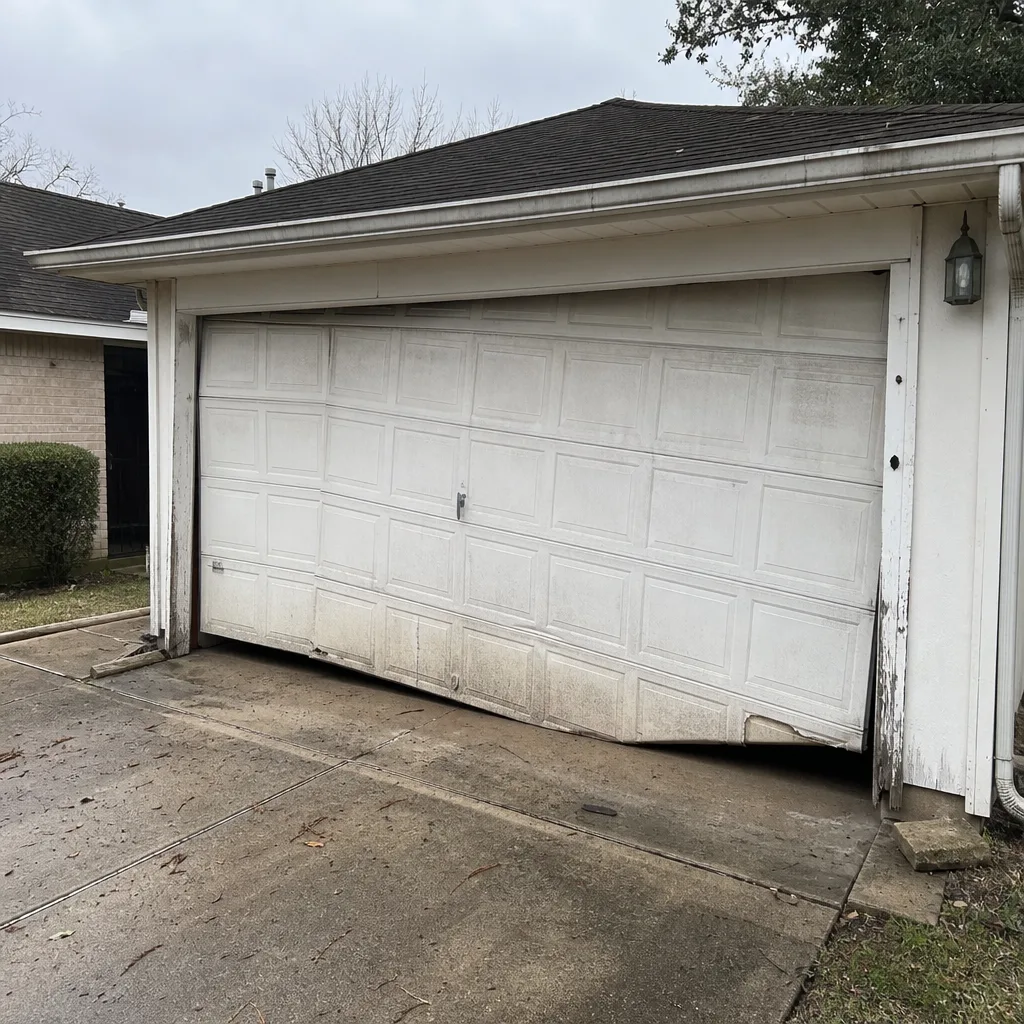 Before
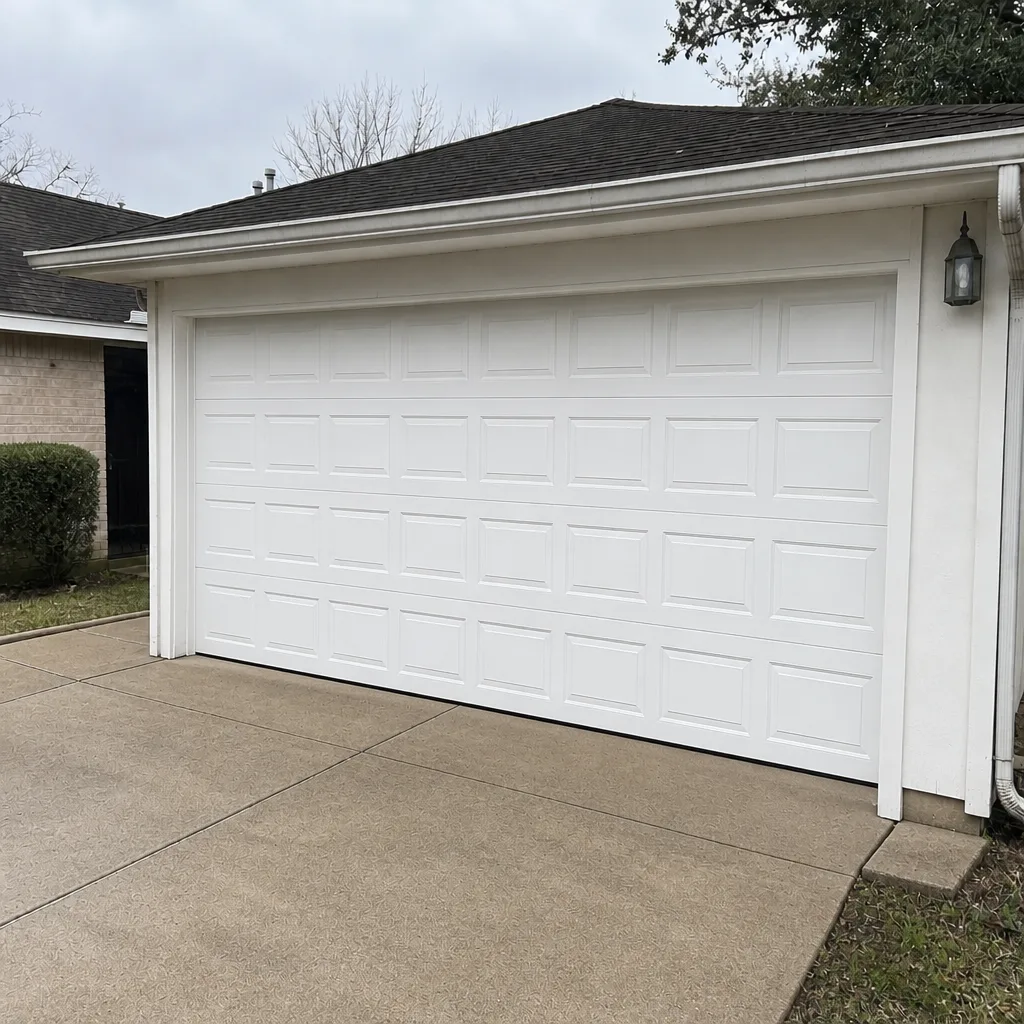 After
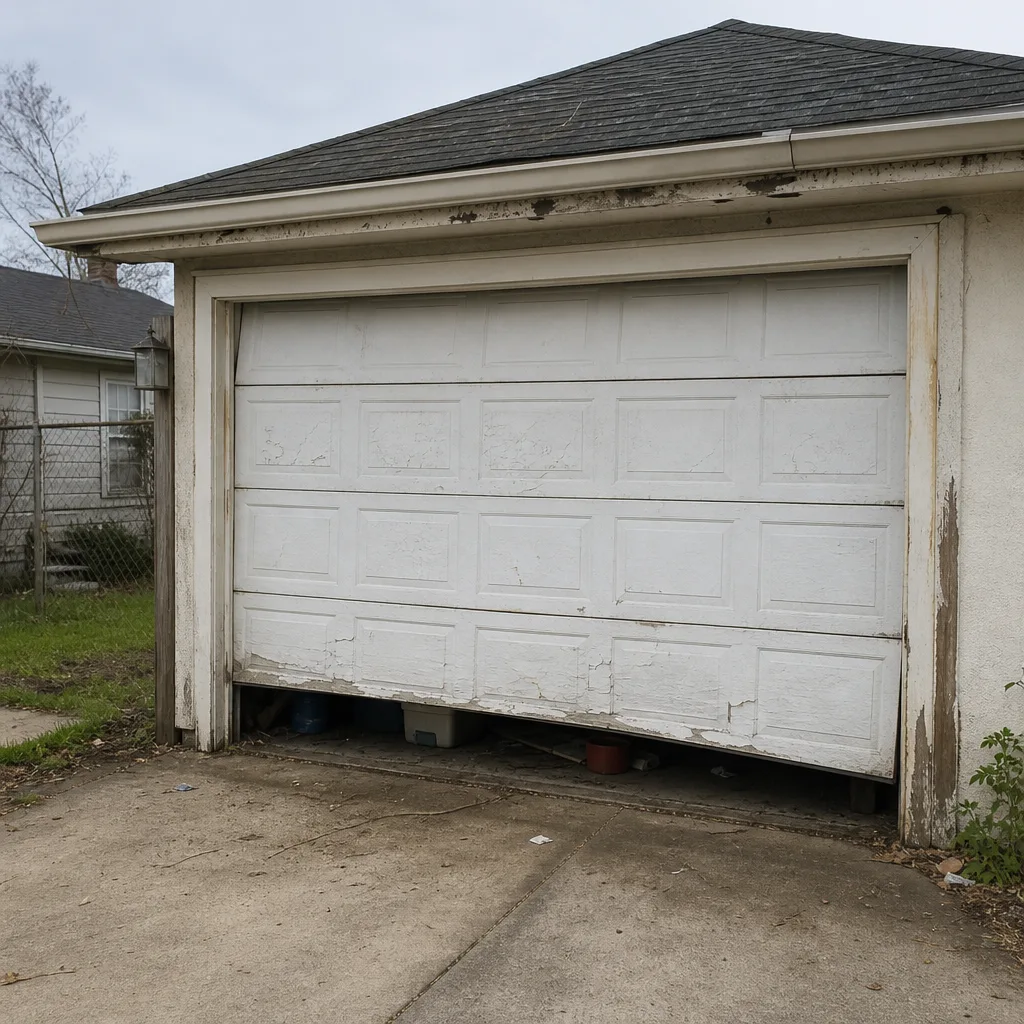 Before
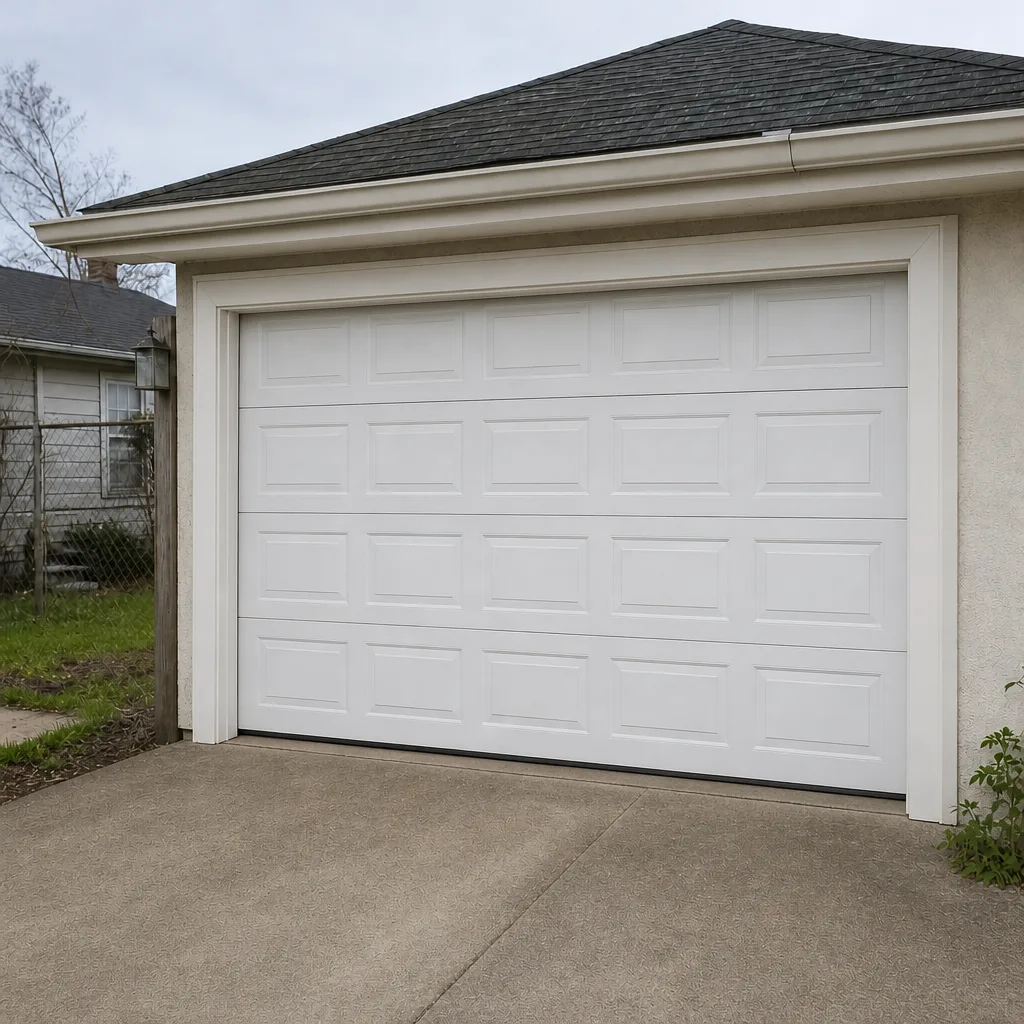 After
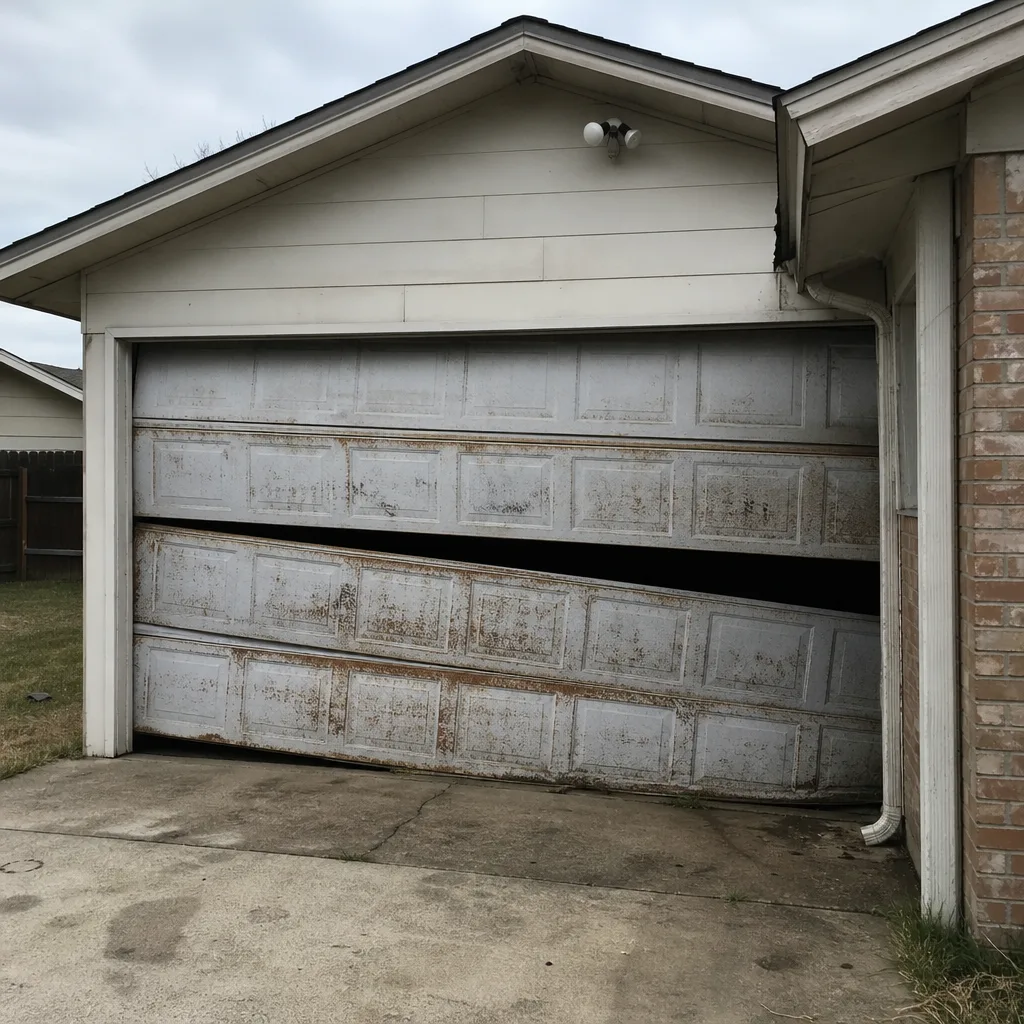 Before
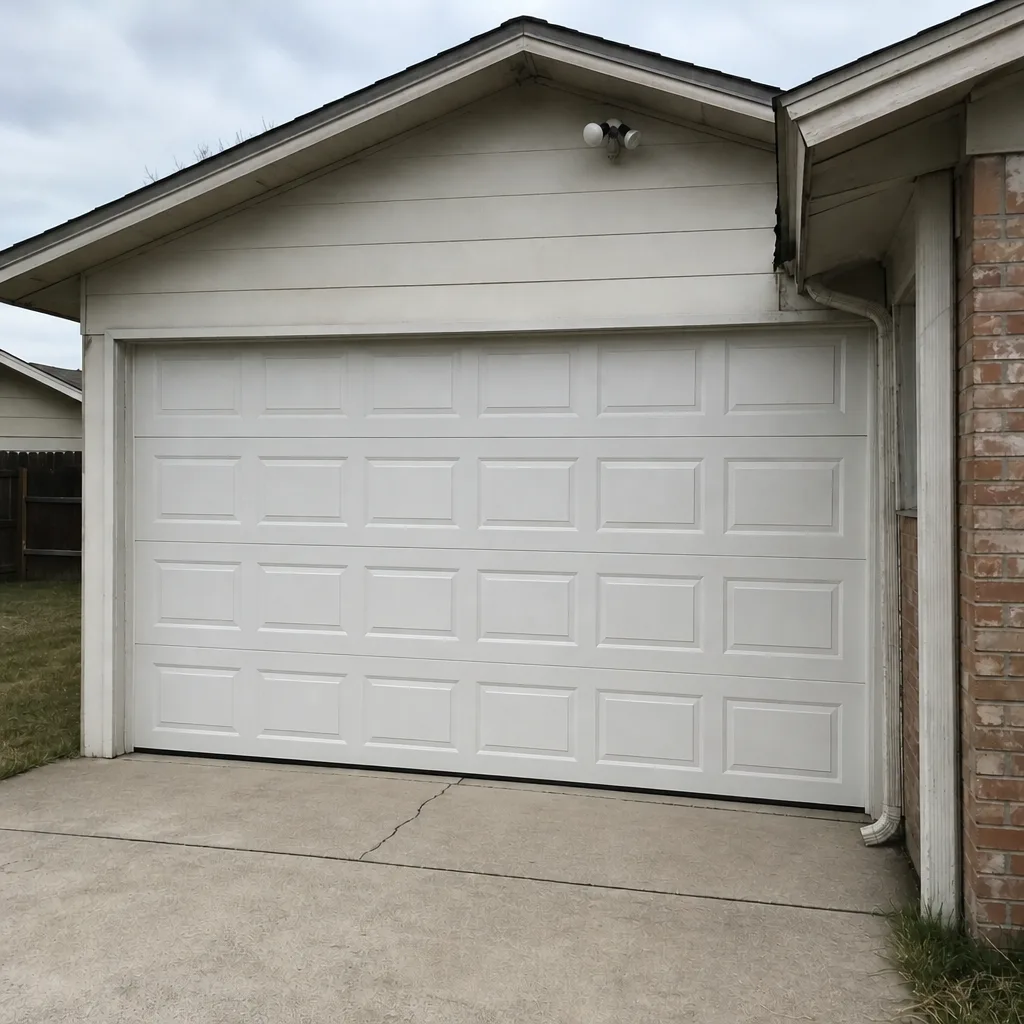 After
When to Call a Professional
Call a professional the moment a repair involves a spring, a cable, or the door coming off its tracks, and call right away if you can see a broken spring or hear a loud bang from the garage. Call when the door reverses randomly and cleaning the sensors didn’t fix it, when the opener runs but the door doesn’t move, or when the door hangs crooked or binds. Call when you’re replacing a door rather than repairing one, particularly if the current door is older or you’re not sure about the wind rating. And call if you’ve already attempted a repair and it hasn’t worked, no matter how small the attempt was. We answer 24/7. Fast dispatch from 7am to 7pm, Sunday through Friday, with same-day service where possible. Texas City Garage Door Repair Pros offers free estimates in Texas City. Call (844) 443-3807.
Frequently Asked Questions
No, garage door spring repair is not a DIY-safe task. Torsion and extension springs store large amounts of energy even when the door is down, and releasing that energy unexpectedly can cause severe injury. The correct winding bars, torque specs, and turn counts are specific to your door, and doing the job without them risks both your safety and your manufacturer warranty. Call (844) 443-3807 for a free estimate before you attempt it.
In most cases, yes. Manufacturer warranties on springs and openers typically exclude damage caused by improper installation or modification, and a self-performed spring job usually counts. Brands like Clopay, Amarr, Wayne Dalton, and Craftsman have specific clauses in their fine print, so it’s worth reading your manual. Having a trained technician handle the spring protects the coverage you already paid for.
You can safely handle safety sensor alignment, lubrication, remote and keypad programming, weatherstripping and bottom seal replacement, visual inspections, and tightening loose hinge bolts. None of these involve springs, cables under tension, or lifting the door. If a task requires you to touch a spring or a cable, or to move the door off its track, it’s time to call a professional.
That depends on the specific situation, so ask your city’s building department before you buy or install a new door. Texas City’s proximity to the water means wind-load ratings on doors matter more here than they do inland, and a permitted install that meets the local rating is what protects your investment. If you’re not sure whether a replacement needs a permit, the building department is the right call.
Our technicians work on Clopay, Amarr, Wayne Dalton, and Craftsman doors, and on LiftMaster, Chamberlain, Genie, and Raynor openers. That brand familiarity means we’re not guessing at parts or sequences for your specific system, and we can diagnose whether the problem sits with the door, the hardware, or the opener. Call (844) 443-3807 for a free estimate.
Yes, in many cases, especially for spring, cable, and opener problems. We answer 24/7, and fast dispatch from 7am to 7pm, Sunday through Friday, means a technician can often be out the same day. A call outside dispatch hours is booked into the next opening. Call (844) 443-3807 for a free estimate.
The Bottom Line
The DIY-versus-professional question comes down to where the risk actually lives. Sensors, lubricant, remotes, and weatherstripping are yours to handle, and doing them yourself saves real money. Springs, cables, structural track work, and anything that unbalances the door are tasks to hand to a trained technician, both for your safety and for the warranty on the parts you already own. In Texas City, add wind-load and permit questions to the list before any door replacement. If you’re unsure, that uncertainty is your cue to call for a free estimate rather than guess.
Texas City Garage Door Repair Pros is here for the repairs that need a specialist, from garage door repair to full installations, and we know the brands on your door and opener before we arrive. Whether the issue is a broken spring, an opener that’s stopped responding, or a door that won’t stay on track, one call covers the whole system. Call (844) 443-3807. We answer 24/7. Fast dispatch from 7am to 7pm, Sunday through Friday. Estimates are free, and the written quote sets the final price before any work starts.
Written by the team at Texas City Garage Door Repair Pros.